

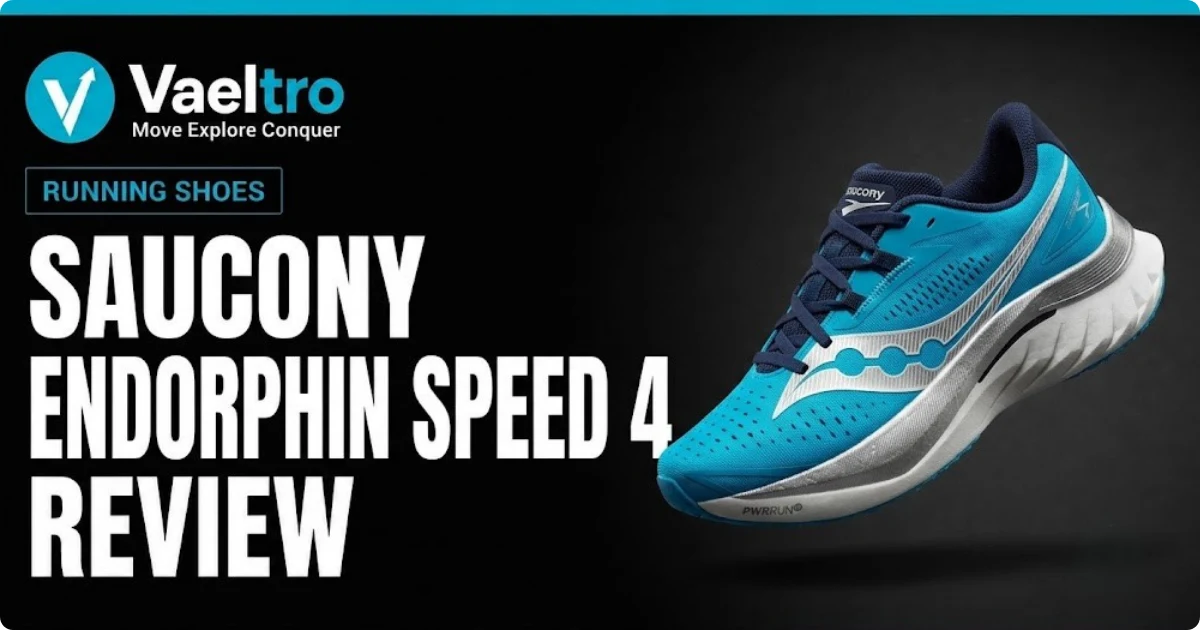
Most speed trainers force a compromise. They feel fast on tempo runs but punishing on recovery days. Or they’re comfortable enough for daily use but don’t deliver the energy return you actually want when you’re pushing hard.
The Saucony Endorphin Speed 4 is built around a different idea that a shoe can be genuinely fast and genuinely comfortable without asking you to choose one over the other. That’s a bold claim for a $170 shoe. This review looks at whether it holds up.
If you already own the Speed 3, there’s a specific question worth answering: is the update meaningful enough to justify replacing a shoe that most runners loved? That answer is here too.
Quick Answer
The Saucony Endorphin Speed 4 is a nylon-plated speed trainer with a PWRRUN PB midsole that works well across easy runs, tempo efforts, and race days. It’s versatile enough for daily use but responsive enough to double as a faster workout shoe. At $170, it sits between a basic daily trainer and a carbon-plated racer in both price and performance.
What Makes the Endorphin Speed 4 Different
The Endorphin Speed 4 sits in an interesting category it’s not a pure daily trainer, and it’s not a full carbon-plated race shoe. It uses a curved nylon speedroll plate embedded in a PWRRUN PB foam midsole, which is the same supercritical foam found in Saucony’s flagship Endorphin Pro.
That foam is genuinely special. PWRRUN PB is lightweight, bouncy, and doesn’t compress and deaden the way traditional EVA foams do over the course of a long run. The nylon plate works with the rocker geometry to push the foot forward through each stride, creating a ride that feels faster than a standard trainer without the harsh, unforgiving feel of some stiffer carbon-plated options.
The upper uses a thin, breathable engineered mesh with minimal overlays. It’s a snug fit through the midfoot with a toe box that gives enough room for natural splay. The heel collar is padded without being excessive, and lockdown is solid without requiring aggressive lacing.
The stack height sits at 39mm in the heel and 35mm in the forefoot a 4mm drop that keeps ground feel reasonable while still offering substantial cushioning.
| Spec | Detail |
|---|---|
| Midsole Foam | PWRRUN PB (supercritical) |
| Plate Material | Nylon (Speedroll) |
| Heel Stack Height | 39mm |
| Forefoot Stack Height | 35mm |
| Heel-to-Toe Drop | 4mm |
| Weight (Men’s US 9) | 7.5 oz / 213g |
| Weight (Women’s US 7) | 6.3 oz / 179g |
| Outsole | PWRTRAC rubber (targeted placement) |
| Terrain | Road |
| Retail Price | $170 |
Key Specs at a Glance
The Endorphin Speed 4 weighs approximately 7.5 oz (213g) in a men’s size 9 and 6.3 oz (179g) in a women’s size 7. The 4mm heel-to-toe drop is lower than many traditional trainers, which contributes to the more forward-feeling ride.
The outsole uses a targeted rubber placement pattern Saucony calls this PWRTRAC covering the high-wear zones at the heel and forefoot while leaving sections of exposed foam in areas where rubber would only add weight. It’s a durable setup for road running, though it shows wear faster on rougher surfaces or if you regularly run on packed gravel.
Colorway options expand with each generation, and the Speed 4 includes several bold options alongside more subdued choices.
How the Endorphin Speed 4 Actually Feels to Run In
Easy and Recovery Runs
The most common objection to plated shoes as daily trainers is firmness. Many carbon and nylon-plated options feel efficient at faster paces but stiff and tiring on easy days when your gait naturally softens.
The Speed 4 doesn’t have this problem to the same degree. The PWRRUN PB foam is soft enough on easy paces to absorb impact without creating the bouncy instability that some maximal trainers produce. The rocker geometry means the shoe guides each stride naturally rather than fighting your foot.
That said, runners who prefer an extremely soft, plush underfoot feel — the kind you get from a shoe like the Hoka Clifton or New Balance 1080 will find the Speed 4 firmer than expected. It’s not harsh, but it’s also not a cushion-first shoe.
For easy miles, it works. Most runners find they can wear it several days in a week without the leg fatigue that some speed-oriented shoes create. The question of daily mileage durability is addressed below.
Tempo Runs and Threshold Work
This is where the Speed 4 earns its reputation. The combination of the PWRRUN PB midsole and the nylon plate creates a propulsive feel at threshold paces that most trainers simply can’t replicate.
The transition from heel contact through toe-off is smooth and energetic. The shoe doesn’t feel like it’s working against you at faster paces — it accelerates with you. Runners who have used this shoe for tempo blocks, intervals, and marathon pace work consistently describe a feeling of forward momentum that reduces the effort of sustained fast running.
At very fast paces — all-out 5K effort or shorter — the Speed 4 reaches the upper limit of what a nylon-plated shoe can do. It’s excellent, but a carbon-plated shoe like the Endorphin Pro offers more stiffness and more aggressive energy return for true race efforts. The Speed 4 is a better training partner than a race-day weapon, though it handles race distances up to the marathon reasonably well.
Race Day
Whether the Speed 4 is a good race shoe depends on your pace and goals. For runners targeting half marathon or marathon efforts in the 4:00–6:00 min/mile range, it performs well. The weight is competitive, the energy return is real, and the fit is secure without causing hotspots over long distances.
For shorter distances or faster paces, a full carbon shoe is likely a better choice — not because the Speed 4 fails, but because the difference in energy return becomes meaningful when every second counts.
Runners using the Speed 4 as their primary race shoe for half marathons have reported clean performances with no durability or comfort issues during efforts lasting 90 minutes or more.
Endorphin Speed 4 vs. Speed 3: Is the Upgrade Worth It?
The Speed 3 was already a well-regarded shoe, which makes this comparison worth addressing directly rather than glossing over.
The Speed 4 updates include refinements to the upper geometry, a slightly revised midsole foam formulation, and adjustments to the outsole rubber placement. The overall ride character — the propulsive, bouncy forward feel that made the Speed 3 popular — is preserved.
If you’re running in the Speed 3 and it’s still in good condition, there is no urgent reason to upgrade. The Speed 4 is a better shoe, but the gap is not dramatic. Runners who wore the Speed 3 into heavy rotation and are looking at replacement will find the Speed 4 a natural and comfortable step forward.
The upper on the Speed 4 fits slightly truer to size for most runners, which addresses a minor complaint some Speed 3 users had about sizing consistency. If you sized up in the Speed 3, it’s worth trying your true size in the Speed 4 before committing.
| Feature | Endorphin Speed 3 | Endorphin Speed 4 |
|---|---|---|
| Midsole Foam | PWRRUN PB | PWRRUN PB (revised formulation) |
| Plate | Nylon (Speedroll) | Nylon (Speedroll) |
| Heel Drop | 4mm | 4mm |
| Upper | Engineered mesh | Refined engineered mesh — truer to size |
| Outsole | PWRTRAC rubber | PWRTRAC rubber (adjusted placement) |
| Retail Price | $160 | $170 |
| Upgrade Urgency | — | Low if Speed 3 is in good condition |
Who Should Buy the Endorphin Speed 4
The Speed 4 is a strong choice for runners who:
- Want one shoe that handles both daily training and faster workouts without compromising significantly on either
- Are training for a half marathon or marathon and need a reliable daily trainer that can also serve as a workout shoe or race option
- Prefer a forward-biased, energetic ride over soft, plush cushioning
- Run 30–50 miles per week and want a durable shoe that maintains performance over high mileage
- Are moving up from a standard daily trainer and want their first experience with plated footwear without committing to a full carbon-plated race shoe
Women runners will find the Speed 4 fits well through the midfoot, though those with wider toe boxes may want to try it on before committing — the forefoot is snug by design.
Who Should Look Elsewhere
The Speed 4 is not the right shoe for every runner. Consider a different option if you:
- Want maximum softness and plush cushioning on recovery days — the Speed 4 is firm enough that dedicated easy-day runners may prefer a pure daily trainer
- Are looking for a full race shoe for 5K or 10K efforts — the Endorphin Pro or a carbon-plated alternative from another brand will serve better at those distances and paces
- Have significant overpronation and rely on stability features — the Speed 4 is a neutral shoe with no structured guidance
- Are training at lower mileage and mostly running easy — the propulsive character of the Speed 4 is most valuable at moderate to faster paces where it earns its keep
- Run primarily on trails or mixed surfaces — the outsole is built for roads
Is the Endorphin Speed 4 Worth the Price?
At $170, the Speed 4 sits at the higher end of the training shoe market but well below the $250–$280 range of carbon-plated race shoes. Whether that price makes sense depends on how you’ll use it.
If the Speed 4 replaces two shoes — your daily trainer and your tempo shoe — then $170 for a single versatile option represents real value compared to buying two separate shoes. This is the strongest case for the Speed 4’s pricing: it genuinely covers more ground than most shoes at the same price point.
If you already own a comfortable daily trainer and are looking only for a tempo or race shoe, the value equation changes. In that case, the Speed 4 competes against shoes like the Nike Vaporfly or Adidas Adizero Adios Pro, which are more expensive but offer more aggressive performance for race-day use specifically.
For most recreational runners training 4–6 days per week, the versatility and durability of the Speed 4 makes $170 feel reasonable over the lifespan of the shoe.
Final Verdict
The Saucony Endorphin Speed 4 earns its reputation as one of the most versatile speed trainers available. It’s not the softest shoe for recovery days, and it’s not the most aggressive option for race day but it handles both situations well enough to function as a single go-to shoe for a wide range of training.
The PWRRUN PB midsole and nylon plate combination delivers a genuinely energetic ride that remains comfortable across high mileage. The Speed 3 upgrade is real but incremental current Speed 3 owners are not missing out on a dramatic improvement.
Where the Speed 4 stands out most is in its ability to eliminate the compromise that most runners accept between daily comfort and training performance. For runners who want one shoe that’s genuinely good at multiple jobs, it’s hard to find a better option at this price.
