

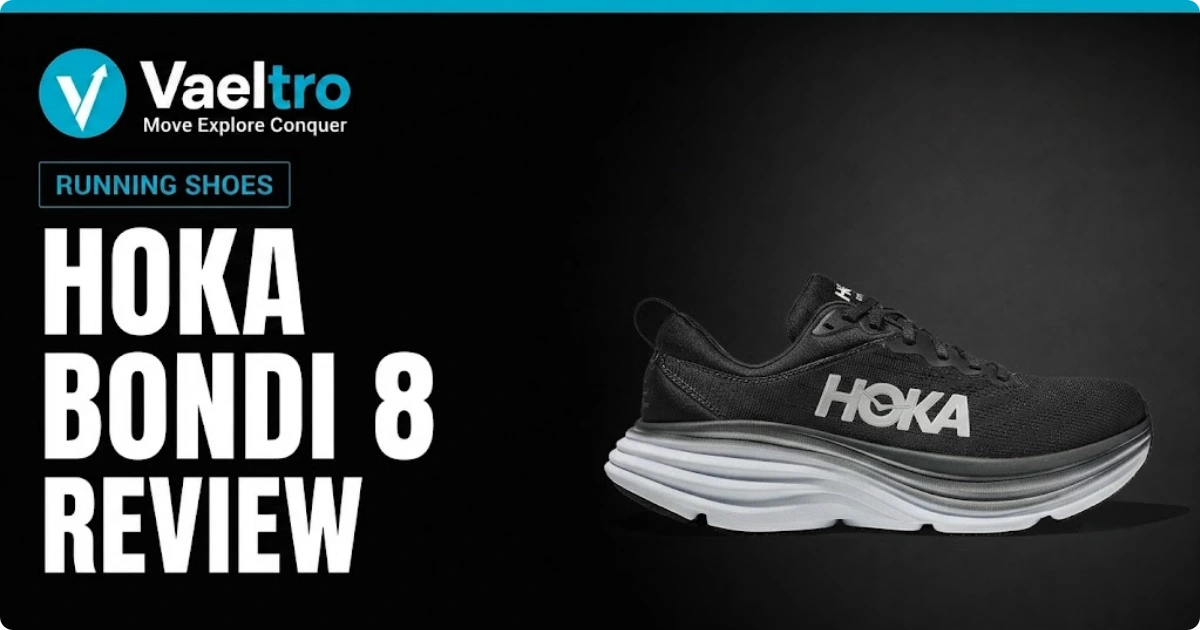
There is a particular kind of runner and a particular kind of day that calls for maximum cushioning. Recovery runs after long training blocks. All-day stadium events or walking tours where your feet never quite get a break. Those mornings when your joints feel older than they should, and you still need to get the miles in.
For those moments, the HOKA Bondi has been the answer for years. The Bondi 8 pushed that formula further than any version before it, landing with the highest stack height HOKA had ever put under a road shoe and a ride that convinced many runners to stop looking for alternatives.
Now that the Bondi 9 has arrived and the Bondi 8 is officially discontinued, the question changes. Not “is this a great shoe?” it clearly is but “is it still worth buying at a discount, and does anything about it make it the better choice over its successor?” This review answers both.
Quick Answer
The HOKA Bondi 8 is a maximum-cushion daily trainer best suited to easy runs, recovery days, and high-mileage walkers who prioritize soft underfoot comfort over responsive energy return. It remains an excellent shoe — now available at reduced prices — but runners comparing it to the Bondi 9 will find the newer model offers a meaningfully updated ride with a softer, less rigid midsole.
What Is the HOKA Bondi 8?
The HOKA Bondi 8 is the eighth generation of HOKA’s flagship maximum-cushion road running shoe. It sits at the top of HOKA’s everyday trainer lineup, positioned above the Clifton as the brand’s highest-stack, softest-riding option for road and pavement.
Released in 2022, the Bondi 8 brought the highest stack height HOKA had ever put into a road shoe at the time: 40mm in the heel and 35mm in the forefoot. That 5mm heel-to-toe drop sits on the moderate end for a maximalist shoe, and the full EVA midsole is built around HOKA’s signature early-stage rocker geometry, which guides the foot through a smooth heel-to-toe transition without requiring an active push-off.
It is not a performance shoe. It does not return energy like a carbon-plated racer or a firmer daily trainer. What it does better than almost anything else in its category is absorb impact and keep legs feeling fresh on easy effort days.
Who Is the HOKA Bondi 8 For?
The Bondi 8 was designed for runners and walkers who need maximum cushioning above everything else. That covers a wider group than most people assume.
Heavy heel-strikers benefit most directly. The thick heel stack absorbs a disproportionate amount of contact force, which reduces felt impact on the knees, hips, and lower back — a meaningful difference over longer efforts. Runners returning from injury, particularly those with plantar fasciitis, knee pain, or stress fracture history, frequently find that the Bondi 8 lets them train more comfortably than firmer alternatives.
It is also one of the most walkable shoes HOKA has made. Healthcare workers, retail staff, and anyone else spending eight or more hours on hard floors regularly choose the Bondi 8 for its combination of cushioning depth and stable platform. The rocker sole reduces forefoot fatigue during standing and walking in a way that flat-soled cushion shoes do not replicate.
Where it fits less naturally: tempo runs, races of any distance, or runners who prefer ground feel and a more energetic toe-off. The Bondi 8 absorbs rather than returns, and faster paces can feel muted and effortful compared to more responsive trainers.
How Does the HOKA Bondi 8 Feel to Run In?
Cushioning and Stack Height
The 40mm heel stack is the number everyone cites, and it earns the attention. Underfoot, the Bondi 8 delivers a plush, deep cushioning feel that absorbs impact without bottoming out — even for heavier runners who might compress a softer foam completely. The EVA compound used is firmer than modern nitrogen-infused or PEBA-based foams, but it distributes load broadly rather than creating pressure points.
What surprises some runners is that the cushioning does not feel spongy or unstable despite the height. The wide platform and meta-rocker geometry work together to keep the foot properly positioned throughout the gait cycle, which gives the Bondi 8 a more controlled feel than its stack height might suggest.
Ride Feel and Rocker
HOKA’s meta-rocker is the defining characteristic of the Bondi ride. Rather than requiring the runner to actively push off, the curved sole shape rolls the foot forward through the stride. At easy and moderate paces, this feels natural and low-effort — almost like the shoe is doing a portion of the work.
The tradeoff is limited feedback from the ground. Runners who like to feel the road beneath them will find the Bondi 8 isolating. At faster paces, the rocker geometry can feel less cooperative, as the shoe is optimized for a slower, more deliberate stride rhythm.
Heel-to-Toe Transition
The Bondi 8’s transition is smooth by design and best appreciated at conversational pace. Heel contact is soft and controlled, the midfoot rolls through efficiently, and the forefoot exits without requiring extra effort. There is no snappiness or propulsion at the toe-off — the shoe simply guides rather than drives.
Runners who forefoot strike will find less of the Bondi 8’s benefit, as the heel stack advantage becomes largely irrelevant and the firmer-than-expected forefoot midsole can feel less forgiving than expected for a shoe at this price.
Upper, Fit, and Width Options
Standard Width vs. Wide Fit
The Bondi 8 is one of the few cushioned trainers that HOKA offers in multiple widths, and this matters. The standard (D for men, B for women) fits true to size with a moderately roomy toe box — wider than most neutral trainers but not as generous as a dedicated wide-fit shoe. The wide option (2E for men, D for women) adds meaningful volume in the forefoot and midfoot without distorting the heel cup.
Runners with bunions, wide forefeet, or those who supinate often find the Bondi wide genuinely comfortable where other maximalist shoes create pressure points. This is one of the shoe’s underreported strengths.
Fit tip: the Bondi 8 runs true to size for most runners. Those between sizes who typically go up a half size for running should follow the same approach here.
Durability and Breathability
The engineered mesh upper is soft against the skin and secure without being constrictive. Breathability is adequate rather than exceptional — the Bondi 8 runs warm in summer heat compared to more open-weave uppers. For cool-weather running or indoor use, this is not a concern.
The tongue is lightly padded and stays in place well during runs. The heel collar has foam padding that accommodates narrower heels without causing slippage, though runners with very narrow heels may want to experiment with lacing techniques.
Outsole rubber is placed strategically rather than covering the full contact surface, which is common in HOKA’s lineup. Durability is reasonable for a cushion-focused trainer — expect 400 to 500 miles under typical easy-day use, though harder surfaces and heavier runners will reach the lower end of that range sooner.
Is the HOKA Bondi 8 Heavy?
The Bondi 8 weighs approximately 10.8 oz (306g) in a men’s US 9 and around 9.4 oz (267g) in a women’s US 8. For context in its category, that is on the heavier side for a cushioned daily trainer but not as heavy as the stack height might lead some to expect.
In practice, the weight is noticeable over longer distances and rarely an issue for the use cases this shoe is built around. Recovery runs, easy long runs, and walking are not situations where a few extra ounces create meaningful fatigue. Where weight matters racing, tempo sessions the Bondi 8 is not the appropriate shoe choice regardless of the number on the scale.
HOKA Bondi 8 vs. Bondi 7: What Changed?
The jump from Bondi 7 to Bondi 8 was one of the more significant generational updates in the Bondi line. HOKA increased the stack height, raised the heel collar for improved achilles comfort, and redesigned the upper to be softer and more breathable. The midsole geometry was also adjusted to improve the rocker transition, which the Bondi 7 executed less smoothly in the forefoot.
For runners who used the Bondi 7 and appreciated it, the Bondi 8 represents a clear improvement across nearly every area. The ride is more refined, the upper is more comfortable, and the fit accommodates a wider range of foot shapes. There is little reason to seek out Bondi 7 stock when Bondi 8 units remain available at competitive prices.
HOKA Bondi 8 vs. Bondi 9: Should You Still Buy the 8?
| Feature | HOKA Bondi 8 | HOKA Bondi 9 |
|---|---|---|
| Heel Stack Height | 40mm | 41.5mm |
| Forefoot Stack Height | 35mm | 36.5mm |
| Heel-to-Toe Drop | 5mm | 5mm |
| Midsole Material | EVA | Reformulated softer foam |
| Ride Feel | Plush but firmer underfoot | Noticeably softer and more compliant |
| Upper | Engineered mesh | Updated engineered mesh |
| Status | Discontinued — available at discount | Current model |
| Best For | Budget-conscious buyers wanting max cushion | Runners wanting the best current Bondi ride |
This is the most relevant comparison for anyone shopping today, and it deserves a direct answer.
The Bondi 9 uses a reformulated midsole foam that is softer and more compliant than the EVA in the Bondi 8. Most runners who have tested both describe the Bondi 9’s ride as noticeably plusher and less firm underfoot, particularly in the heel. The Bondi 8’s midsole, by comparison, can feel slightly stiff and resistant by modern maximalist standards — a quality that was less obvious before the Bondi 9 existed as a reference point.
The Bondi 9 also updates the upper construction and makes minor adjustments to the heel geometry. Overall, it is the more refined shoe by a measurable margin.
So should you buy the Bondi 8 instead? Potentially yes, under specific conditions. If the Bondi 8 is available at a significant discount which is increasingly the case as retailers clear inventory the price difference may outweigh the ride improvements the Bondi 9 offers. For walkers and very easy-pace runners who simply want maximum cushioning at a lower cost, the Bondi 8 still delivers that. For runners who want the best current version of the Bondi experience, the Bondi 9 is the correct choice.
HOKA Bondi 8 vs. Clifton 9: Which One Is Right for You?
| Feature | HOKA Bondi 8 | HOKA Clifton 9 |
|---|---|---|
| Heel Stack Height | 40mm | 29mm |
| Weight (Men’s US 9) | 10.8 oz / 306g | 8.8 oz / 249g |
| Heel-to-Toe Drop | 5mm | 5mm |
| Ride Feel | Maximum cushion, lower ground feel | Balanced cushion, slightly more responsive |
| Best Use | Recovery runs, easy miles, walking | Easy to moderate runs, versatile daily trainer |
| Pace Range | Easy pace only | Easy to moderate tempo |
| Choose If | Maximum cushion is your top priority | You want one shoe for multiple effort levels |
The Clifton 9 and Bondi 8 are often cross-shopped, and while both belong to HOKA’s daily trainer lineup, they serve different purposes.
The Clifton 9 is lighter, slightly more responsive, and better suited to a wider range of paces. It is a legitimate option for easy days, moderate-effort runs, and even some tempo work for heavier-than-average runners. The Bondi 8 is slower, softer, and more specialized — it is the correct choice when maximum cushion is the priority and pace is secondary.
Runners who want one shoe that covers recovery days and faster efforts should lean toward the Clifton. Runners whose easy days are genuinely easy, or who are managing joint discomfort, will typically get more out of the Bondi 8.
Downsides of the HOKA Bondi 8
No shoe is the right choice for everyone, and the Bondi 8 has a specific set of limitations that are worth understanding before buying.
The midsole is firmer than the marketing language around “maximum cushioning” implies, especially compared to newer foam technologies in competitors and in the Bondi 9. Runners expecting the softest underfoot feel on the market may be surprised that the Bondi 8 has a distinct firmness to it, particularly during the first 15 to 20 minutes before the foam warms up slightly.
The outsole rubber coverage is incomplete, and portions of the midsole make direct contact with the road on certain surfaces. This is a known HOKA design pattern across the lineup, but it means the midsole wears faster than a fully rubber-covered outsole would. Runners doing high mileage on rough pavement should monitor midsole compression over time.
The shoe is also poorly suited to wet conditions. The partial rubber outsole and relatively shallow lug pattern provide limited grip on wet roads or any surface that is not dry pavement. This is not a trail shoe or a wet-weather trainer.
Finally, at full retail price, the Bondi 8 was expensive relative to competitors offering similar or superior cushioning. Now that it is discontinued and discounted, this concern is less relevant — but at original MSRP, value-for-money required closer scrutiny.
Is the HOKA Bondi 8 Discontinued?
Yes. HOKA officially discontinued the Bondi 8 following the release of the Bondi 9. This is standard practice for the brand, which releases a new Bondi generation approximately every 18 to 24 months and phases out the previous version as the new one becomes widely available.
Discontinued does not mean unavailable. Many retailers — including major online running specialty stores and general athletic retailers continue to stock Bondi 8 units, typically at reduced prices. HOKA occasionally sells remaining pairs directly as well.
For runners who are comfortable buying a proven shoe that will no longer be restocked, the Bondi 8 at a discount represents good value. The only practical concern is that replacement pairs in your specific size and width may become harder to find over time.
Final Verdict
The HOKA Bondi 8 is a well-built, purposeful shoe that does exactly what it was designed to do: deliver maximum cushioning on easy effort days and protect high-mileage legs from repetitive impact. It is not a shoe for fast running, and it asks nothing from the runner in terms of engagement with the ground. That is precisely its appeal for the right runner.
Now that it has been succeeded by the Bondi 9 which offers a genuinely softer and more refined ride the Bondi 8’s best argument is price. If you can find it at a meaningful discount, it remains a credible choice for recovery runs, long slow miles, and all-day walking.
If you are buying at close to full price and the Bondi 9 is available, choose the newer shoe. If you are finding the Bondi 8 at a significant markdown and your goal is simple, uncompromising cushioning at a lower cost, it will not disappoint.
