

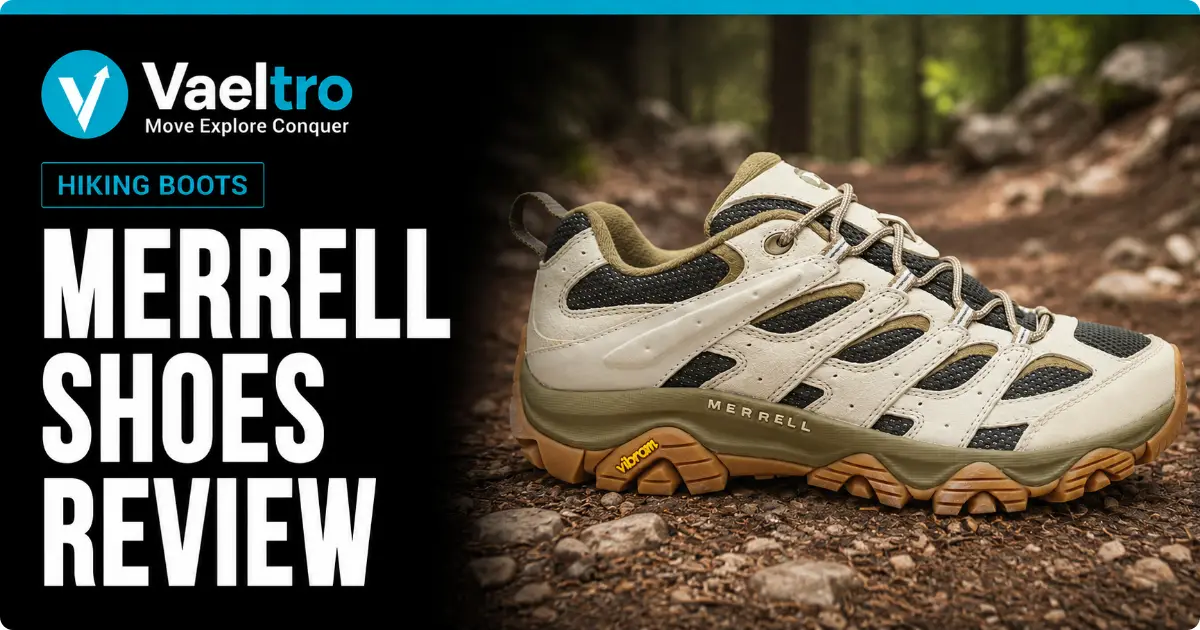
Merrell is one of those brands that shows up in every hiking trail parking lot, every outdoor retailer, and every online forum thread that starts with “what shoes should I buy?” Over the years, it has become the default recommendation for casual hikers, walkers, and outdoor workers across the US and UK alike.
But popular is not the same as best. And a brand that sells millions of pairs can still disappoint the wrong buyer.
After putting more than 15 Merrell models through their paces across hiking trails, work environments, and everyday use from the iconic Moab series to the minimalist Vapor Glove this review gives you a complete, honest picture of what Merrell delivers, where it falls short, and exactly who it is built for.
Quick Answer
Merrell makes solid footwear for casual hikers, walkers, and people who need comfortable all-day shoes. Its hiking lineup is built around comfort and durability rather than technical performance, making it ideal for easy to moderate trails. Serious hikers, narrow-footed buyers, and anyone chasing the lightest or most responsive shoe on the market will likely find better options elsewhere. For the right person, Merrell is a genuinely good brand. For the wrong person, there are better choices at a similar price.
What Kind of Brand Is Merrell?
Merrell was founded in 1981 and built its reputation on accessible outdoor footwear. It sits comfortably in the mid-range of the market below premium technical brands like Salomon, La Sportiva, and HOKA, but well above budget fashion footwear. Today it is owned by Wolverine Worldwide, the same parent company behind Merrell, Chaco, Sperry, and Wolverine work boots.
The brand’s entire philosophy centers on comfort, accessibility, and durability. Merrell shoes are designed to feel good out of the box, fit a wide range of foot shapes, and hold up to regular use over time. That approach wins a huge audience among recreational hikers, dog walkers, travelers, and people who spend long hours on their feet.
What Merrell is not is a cutting-edge performance brand. It does not prioritize the lightest weight, the most responsive cushioning, or the most aggressive traction. That is a deliberate positioning choice and understanding it is the key to knowing whether Merrell is right for you.
Is Merrell a high-end brand? No. It occupies the mid-market space, which is exactly where most recreational outdoor buyers should be shopping. Its pricing in the US and UK typically runs from around $90 to $175, depending on the model and whether Gore-Tex waterproofing is included.
Merrell Hiking Shoes Review
Merrell’s hiking shoe lineup is its largest and most well-known category. The Moab series alone has sold tens of millions of pairs worldwide, making it arguably the most recognizable hiking shoe on the market.
Comfort and Fit
This is where Merrell consistently earns its reputation. The cushioning across the Moab series, the Moab Speed, and similar models is generous and approachable there is no painful break-in period with most Merrell hiking shoes. Many buyers describe them as feeling like a comfortable sneaker from the first wear.
Merrell hiking shoes tend to run wide through the toe box. For buyers with average or wide feet, this is a significant comfort advantage. The brand also offers wide-size options across most of its popular models, making it one of the more wide-foot-friendly brands in the hiking footwear market.
That wide construction is a tradeoff, though. Buyers with narrow feet frequently experience heel slippage and a sloppy fit. If your feet are on the narrow side, Merrell hiking shoes will likely feel loose no matter what size you choose.
Traction and Outsoles
Most Merrell hiking shoes feature Vibram outsoles, which is a genuine plus at this price point. Vibram rubber is trusted in the industry for its durability and grip, and Merrell’s partnership with Vibram gives buyers more outsole quality than many competing brands at the same price.
That said, the tread pattern on models like the Moab 3 is designed for general outdoor use rather than technical hiking. The moderate, rounded lugs perform well on packed dirt, hardened trails, and light gravel. On steeper terrain, muddy trails, wet rock, or loose scree, that tread begins to show its limits. Buyers who hike more demanding trails regularly will find the grip less confident than what they would get from shoes built specifically for those conditions.
Trail-running-specific Merrell models like the Agility Peak 6 use deeper, more aggressive Vibram lugs and are a notable step up in technical traction.
Waterproofing: Proprietary Membrane vs. Gore-Tex
| Waterproofing Type | Protection Level | Breathability | Long-Term Reliability | Best For |
|---|---|---|---|---|
| Merrell Proprietary Membrane | Good when new; degrades over time | Moderate | Lower | Occasional use, light wet conditions |
| Gore-Tex (GTX) | Consistently high | Higher | Higher | Regular hiking in wet climates |
| Non-Waterproof | None | Best | N/A | Dry climates, desert trails, hot conditions |
Merrell offers two waterproofing options across most of its hiking shoe lineup: its own proprietary waterproof membrane and Gore-Tex. This distinction matters more than most buyers realize.
Merrell’s proprietary waterproofing provides reasonable protection when the shoes are new, but it does not carry the same long-term reliability or breathability as Gore-Tex. Over time and miles, that protection can degrade. For occasional trail use in light wet conditions, it may be perfectly adequate. For regular hiking in genuinely wet climates the Pacific Northwest, the UK, or anywhere that sees consistent rain — Gore-Tex is the more reliable choice.
The Gore-Tex versions of Merrell hiking shoes, such as the Moab 3 GTX, carry a higher price. Whether that premium is worth it depends on where and how often you hike.
Merrell also offers non-waterproof versions of its most popular models. For hikers in dry climates — desert trails, hot summer conditions — the non-waterproof Moab is lighter, more breathable, and a reasonable choice.
Support and Durability
Merrell hiking shoes occupy a middle ground on support. They provide more structure than a regular sneaker but less than a purpose-built technical hiking shoe from brands like Salomon or La Sportiva. For easy to moderate trails, that level of support is adequate for most hikers.
Where Merrell has faced consistent criticism over the years is durability, specifically delamination of the sole and degradation of the waterproof membrane on some models. These are not universal complaints, but they appear frequently enough in owner feedback to be worth noting. Buyers who hike high mileage or in particularly abrasive conditions may find that Merrell shoes wear faster than competitors at a similar or slightly higher price.
Merrell Hiking Boots Review
Merrell’s hiking boot range extends the same core philosophy into a higher-cut silhouette. Models like the Moab 3 Mid and the Rogue Hiker offer ankle coverage for hikers who carry heavier packs, hike on uneven terrain, or simply prefer the added security of a mid-cut boot.
Ankle Support and Stability
The mid-cut Merrell boots provide meaningful ankle support compared to their low-cut counterparts, though they still lean toward the comfort-oriented end of the spectrum rather than the stiff, performance-focused construction of mountaineering or backpacking boots from brands like Lowa or Scarpa.
For day hiking and light overnight trips on well-maintained trails, Merrell hiking boots offer a comfortable balance of support and flexibility. They are not the right choice for technical alpine terrain, heavy multi-day loads on rough trails, or situations where you need a truly rigid platform underfoot.
Best Use Cases for Merrell Boots
Merrell hiking boots perform best for day hikers who want a bit more ankle coverage on moderate trails, casual outdoor users who spend time on uneven ground, and buyers who prioritize comfort and easy wearability over maximum technical performance.
They are also a popular choice for outdoor workers, campsite staff, and nature guides who need footwear that can handle varied terrain all day without being punishingly stiff.
Merrell Trail Running Shoes Review
Merrell’s trail running lineup is a distinct category from its hiking shoes, and it deserves to be evaluated separately. Models like the Agility Peak 6, Morphlite, and Nova 4 are purpose-built for running on trails, with lighter construction, more responsive midsoles, and more aggressive outsole lugs than you will find on the hiking-focused Moab range.
The Agility Peak 6 is the standout in this category. It uses a Vibram Megagrip outsole with deep lugs, includes a rock plate for foot protection, and delivers a stable, secure platform on technical terrain. It is genuinely competitive with trail shoes from Brooks and New Balance at a similar price point.
The Morphlite leans toward comfort running lighter, softer, and more flexible, with a midsole that absorbs impact well. It works for easy trail running and doubles well for hiking and casual use.
The Vapor Glove and Trail Glove series cater to barefoot and minimalist runners very low stack heights, zero-drop geometry, and ground feel that encourages natural foot movement. These are niche products built for a specific running philosophy and are not suited for runners who need cushioning or support.
Merrell’s trail running shoes are not yet at the level of Salomon, HOKA, or Brooks for pure performance, but they offer solid value for recreational trail runners who want dependable grip and durability without paying flagship prices.
Merrell Work Boots Review
Merrell produces a range of work-oriented footwear built for people who spend long hours on their feet in demanding environments. These shoes and boots borrow the brand’s core strengths comfort, durability, and wide-fit-friendly construction and add features like slip resistance and reinforced toe protection in some models.
For light-duty work environments, outdoor industries, retail, and hospitality, Merrell work footwear performs well. The cushioning and support hold up over long shifts, and the Vibram outsoles provide reliable grip on a variety of surfaces.
For heavy industrial environments where safety-rated toe protection and specific ASTM certifications are required, Merrell’s standard work range may not qualify. Buyers in those industries should check the specific certification requirements for their workplace before purchasing.
Merrell Walking and Everyday Shoes Review
One of the most overlooked aspects of the Merrell catalog is how well its hiking shoes double as everyday footwear. The Moab, in particular, has become a genuine lifestyle shoe for many buyers worn as much for dog walking, travel, and casual use as for actual hiking.
For everyday walking on pavement, light paths, and mixed urban surfaces, Merrell hiking shoes perform well. The cushioning is comfortable over long periods, the wide toe box reduces fatigue for many foot shapes, and the durable outsoles hold up to regular daily wear.
Models like the Moab Speed and Moab Flight offer a slightly more modern silhouette than the traditional Moab, with a lighter build and a profile that looks less obviously like a hiking shoe. These have broadened Merrell’s appeal for buyers who want trail-ready durability in a shoe that does not look out of place in everyday settings.
Are Merrell Shoes Good for Wide Feet?
Yes Merrell is consistently one of the better options on the market for buyers with wide feet. The brand’s regular sizing tends to run generously through the toe box compared to many competitors, and its dedicated wide sizes provide even more room without sacrificing the overall structure of the shoe.
Wide-footed buyers frequently find that Merrell’s standard fit is comparable to other brands’ wide offerings. This makes Merrell a reliable first stop for anyone who struggles to find hiking or outdoor footwear in wider widths.
The reverse is also true: buyers with narrow or even average-width feet may find Merrell’s standard sizing too roomy. Heel slippage is a commonly reported issue in the Moab series for buyers who do not have wide feet, and that loose fit can cause blisters on longer hikes.
How Does Merrell Fit? Sizing Guide
Most Merrell shoes run true to size for the majority of buyers. If you typically wear a US men’s 10 or women’s 8, starting with that size is a reasonable approach.
A few specifics worth knowing: Merrell’s wide sizes can run surprisingly generous — some buyers who need wide sizes in other brands find that Merrell’s standard width fits them better. If you are ordering a wide size in Merrell for the first time, it is worth trying the regular width first if possible.
For the Moab series specifically, the higher heel-to-toe drop (around 11.5mm in the Moab 3) means the shoe has a pronounced raised heel. Hikers used to lower-drop trail runners may find this takes some adjustment.
If you are between sizes, sizing down by a half size is often the right call in Merrell, particularly for hikers who find the brand’s regular width too roomy.
Is Merrell Better Than Skechers?
For hiking, trail use, and outdoor performance, Merrell is the stronger choice. Skechers produces comfortable everyday footwear, but its hiking and outdoor lines are not built to the same standard of trail-ready durability, outsole grip, or structural support that Merrell consistently delivers.
Where the comparison gets more interesting is in everyday walking and casual use. Skechers produces some very comfortable walking shoes with memory foam cushioning that appeal to buyers looking primarily for all-day comfort on pavement. For those buyers, Skechers can be a reasonable choice.
But for anyone who plans to spend meaningful time on trails, uneven terrain, or in genuinely outdoor conditions, Merrell offers better traction, more durable construction, and greater trail-specific expertise. Vibram outsoles, structured midsoles, and purpose-built hiking geometry are not features Skechers consistently delivers.
For outdoor use: Merrell. For casual city walking where light cushioning and low price are the priority: Skechers has a market. They are serving different buyers.
Who Should Buy Merrell and Who Should Not
| Buy Merrell If You Are… | Look Elsewhere If You Are… |
|---|---|
| A casual or recreational hiker on easy to moderate trails | A serious hiker on steep, technical, or muddy terrain |
| A buyer with wide or average-wide feet | A buyer with narrow feet prone to heel slippage |
| Someone who wants trail-capable shoes for daily wear | An ultralight hiker or runner prioritizing weight savings |
| A dog walker, traveler, or outdoor worker | A high-mileage hiker focused on long-term durability |
| A hiker in dry or semi-dry climates | A buyer whose main priority was Merrell’s former budget price |
Merrell is a good fit for buyers who match a fairly specific profile. Being clear about that profile avoids disappointment.
Merrell is a strong choice for casual and recreational hikers who tackle easy to moderate trails, dog walkers and everyday outdoor users who want durable footwear, buyers with wide or average-wide feet who struggle to find comfortable hiking shoes, people who want trail-capable shoes they can also wear all day in regular life, and hikers in dry or semi-dry climates who want a non-waterproof option that breathes well.
Merrell is probably not the right choice for hikers who regularly tackle steep, technical, or muddy terrain where traction and rigidity matter most, buyers with narrow feet who are prone to heel slippage, ultralight hikers or trail runners who prioritize weight savings and responsiveness, or those who need a high-mileage hiking shoe with long-term durability as the top priority.
It is also worth noting that Merrell’s value proposition has shifted in recent years. Price increases on some models — partially linked to tariff pressures in the US market have moved the Moab series out of the clear budget tier it once occupied. At its current pricing, Merrell competes more directly with mid-range offerings from Salomon and adidas TERREX, both of which offer more technical performance at a comparable cost. For buyers whose primary motivation was price, that calculation has changed.
Final Verdict
Merrell has earned its place as one of the most recognized outdoor footwear brands in the world, and that reputation is not accidental. For the right buyer, it delivers genuine value: comfortable, durable, wide-friendly footwear that works across hiking, walking, and everyday use without requiring a significant investment in premium gear.
The honest takeaway after testing the full range is this: Merrell excels at making accessible outdoor shoes that casual users will actually enjoy wearing. The Moab series, for all its debate in serious hiking circles, is a comfortable and capable shoe for easy to moderate trails, and Merrell’s trail running and minimalist lines show the brand can compete beyond its comfort-focused roots.
Where Merrell does not lead is in technical performance, narrow-foot fit, or the upper tier of long-distance durability. Serious hikers, technical trail runners, and narrow-footed buyers will find more purpose-built options at a similar or only slightly higher price point.
Buy Merrell if you want comfortable, trail-ready footwear that fits wide feet well and works as hard in everyday life as it does on the trail. Look elsewhere if technical performance, narrow fit, or cutting-edge weight savings are your priorities.
