

Hitting the wall at mile 20 is not a fitness problem. It is a fuelling problem. Most runners who bonk mid-race had plenty of training in their legs they just ran out of carbohydrates to keep those legs moving.
Energy gels exist to solve that problem. But with dozens of brands, formulas, and textures on the market, choosing the wrong one can cause GI distress, energy crashes, or flavours you cannot stomach on mile 22. The right gel, timed correctly, can genuinely change your race.
This guide breaks down every major marathon gel brand with honest long-run analysis, so you can make a confident decision before race day not a desperate one at the expo.
Why Energy Gels Matter More After Mile 18
Your body stores roughly 90 minutes of glycogen the fuel your muscles run on during sustained effort. For most marathon runners, that storage begins to deplete somewhere between miles 16 and 20. When it runs out, pace drops, legs feel heavy, and mental focus deteriorates. That is the wall.
Gels provide fast-digesting carbohydrates that help replenish glycogen on the move. They do not fully replace what your muscles burn, but they slow the depletion enough to maintain pace through the finish line. Without them, most runners at marathon effort will fade.
Starting gels early before you feel like you need one is the foundation of smart marathon fuelling. By the time you feel empty, it is already too late for a gel to rescue your race quickly.
How to Choose the Right Marathon Gel
Not all gels work the same way. Understanding what separates them helps you match a product to your stomach, your pace, and your race distance.
Carbohydrate Type and Absorption Speed
Gels use different carbohydrate formulas. Most traditional gels rely on maltodextrin or a blend of maltodextrin and fructose. The blended approach often called dual-source or multi-transportable carbohydrates allows your gut to absorb more carbs per hour because glucose and fructose use different intestinal pathways.
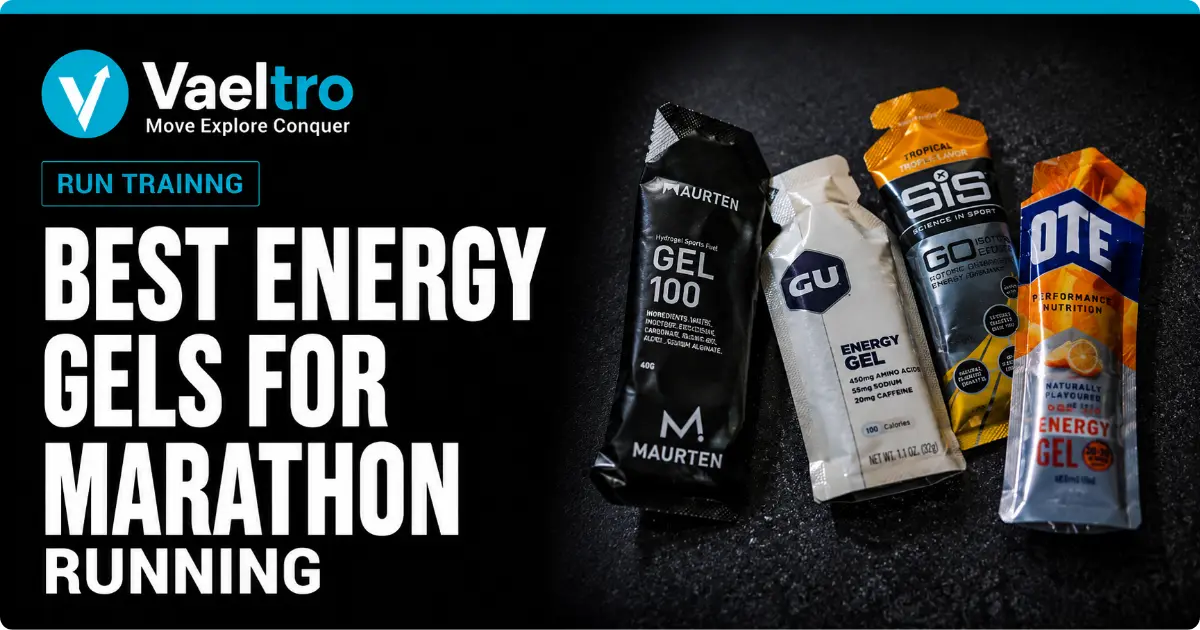
Maurten uses a hydrogel technology that encapsulates carbohydrates in a matrix that passes through the stomach more gently. SiS Go Isotonic gels are designed to be absorbed without additional water. These differences matter most for runners with sensitive stomachs or those pushing higher carb-per-hour targets.
Caffeine Helpful Tool or Stomach Risk
Caffeinated gels can improve mental alertness, reduce perceived effort, and delay fatigue. Research consistently supports caffeine as a performance aid. However, caffeine also stimulates the digestive system, which can cause GI issues when combined with hard running effort and heat.
A common strategy is to reserve caffeinated gels for the second half of the marathon typically from mile 16 onward when mental fatigue becomes a real factor. If you are sensitive to caffeine, test it thoroughly during training before committing to it on race day.
Texture, Taste, and Real-World Usability
On paper, a gel can have the ideal carb formula. In practice, if you cannot get it down at mile 20 when your stomach is churning, it does not matter. Thick gels are harder to consume without water. Watery gels go down faster but may feel less substantial. Flavour fatigue is real many runners who love a gel in training find it unpleasant after two hours of racing.
Test every gel you plan to use at race pace, not during easy jogs. If it works on a 20-miler in the heat, it will work on race day.
Gel Size and Carbs Per Serving
Most standard gels deliver between 20g and 30g of carbohydrates per serving. Some high-carb options like Precision Fuel PF 30 and Maurten Gel 160 go higher. Larger servings mean fewer gels to carry, which simplifies logistics. Smaller servings give you more flexibility in timing but require more packets.
The Best Energy Gels for Marathon Running
| Gel | Carbs Per Serving | Caffeine Options | Texture | Water Needed | Best For |
|---|---|---|---|---|---|
| GU Energy Original | 22g | 20mg / 40mg / 60mg | Thick | Yes | All-around reliability |
| Maurten Gel 100 | 25g | 100mg (CAF version) | Jelly-like | Yes | Sensitive stomachs |
| SiS Go Isotonic | 22g | No | Thin / liquid | No | No-water fuelling |
| Precision Fuel PF 30 | 30g | 100mg (CAF version) | Moderate | Yes | High-carb fuelling |
| Hüma Chia Energy Gel | 21g | No | Slightly grainy | Yes | Natural ingredients |
| Honey Stinger Organic | 24g | No | Medium | Yes | Beginners |
| UCAN Edge | Lower than standard | No | Thin | Yes | Fat-adapted runners |
These are the gels that consistently perform across long training runs and race-day conditions. Each has a distinct advantage that makes it the right choice for a specific type of runner.
GU Energy Original Best All-Around Gel
GU Energy Original is the most widely used marathon gel in the world for a reason. It delivers 100 calories and 22g of carbohydrates per packet, using a blend of maltodextrin and fructose for dual-source absorption. The formula also includes amino acids and electrolytes, which add marginal but real support during long efforts.
The texture is thick but manageable, and the flavour range is the widest of any brand from Salted Watermelon to Vanilla Bean to plain Jet Blackberry. Caffeinated versions are clearly marked with 20mg, 40mg, or 60mg of caffeine, giving you precise control over your intake across the race.
GU is available at virtually every race expo, running store, and sports retailer in the US and UK. That availability alone makes it a sensible choice for first-time marathon runners who may need to pick up gels at the race. It is not the most innovative formula on the market, but it is reliable, well-tolerated, and proven across millions of race finishes.
Best for: Runners who want a trusted, versatile option with wide availability and strong flavour variety.
Maurten Gel 100 Best for Sensitive Stomachs
Maurten has become the gel of choice for elite marathon runners and for good reason. Its hydrogel technology uses a blend of maltodextrin, fructose, and a sodium alginate matrix that is designed to pass through the stomach more efficiently than conventional gels. The result is less GI disruption during hard effort.
The Gel 100 delivers 25g of carbohydrates per packet. The texture is unlike anything else on the market thicker and almost jelly-like, which some runners find unusual at first. There is no added flavour, no sweeteners, and no artificial colours. It tastes mildly sweet and neutral, which works in its favour for runners who experience flavour fatigue late in a race.
Maurten Gel 100 CAF 100 adds 100mg of caffeine a notably high dose so test it carefully before race day.
The primary drawback is cost. Maurten is significantly more expensive than most competitors, which matters when you are budgeting for 5–8 gels per marathon. However, for runners with a history of GI problems in long races, the stomach comfort may justify the price.
Best for: Runners with sensitive stomachs, elite-paced athletes, and anyone who has struggled with GI distress in previous marathons.
SiS Go Isotonic Best for No-Water Fuelling
Science in Sport (SiS) Go Isotonic gels are the only widely available marathon gels designed to be consumed without water. The isotonic formula means the carbohydrate concentration matches your body’s fluid balance, so it absorbs without requiring extra fluid to process it.
Each gel delivers 22g of carbohydrates in a larger 60ml sachet. The texture is noticeably thinner and more liquid than standard gels, which makes them fast and easy to consume even when breathing hard. They are particularly useful at water stations where you want to take a gel without the coordination challenge of swallowing thick product with a cup of water.
Flavour options are extensive and generally well-regarded. SiS is widely distributed in the UK and increasingly available in the US through online retailers and select running stores.
The lower carb density compared to high-carb alternatives means you may need more packets across a full marathon. But for runners who struggle to take gels with water or who find thick gels difficult mid-race, SiS offers a genuinely easier fuelling experience.
Best for: UK runners, runners who struggle with thick gel textures, and anyone who wants to fuel without coordinating water intake.
Precision Fuel & Hydration PF 30 Best for High-Carb Fuelling
Precision Fuel & Hydration (PF&H) has built its reputation on science-led fuelling. The PF 30 gel delivers exactly 30g of carbohydrates using a 2:1 maltodextrin-to-fructose ratio, which is designed to maximise absorption at higher carb-per-hour targets typically 60–90g/hour for competitive marathon runners.
The gel is moderately thick and easy to consume with water. PF 30 Caffeine versions add 100mg per gel, consistent with PF&H’s evidence-based approach to caffeine dosing.
What separates PF&H from most brands is the transparency of their approach. They publish their carbohydrate formulas clearly, their guidance is built on peer-reviewed research, and they offer a personalised fuelling calculator on their website that accounts for your pace, body weight, and sweat rate. For runners who want to approach marathon fuelling systematically, PF&H is the most data-literate brand available.
Best for: Competitive runners targeting sub-4 hours who want to fuel at higher carb-per-hour rates with scientifically informed guidance.
Hüma Chia Energy Gel Best Natural Option
Hüma gels use real fruit and chia seeds rather than processed maltodextrin as their carbohydrate base. Each gel delivers around 21g of carbohydrates alongside natural sodium and potassium from whole food sources.
The texture is slightly grainy from the chia seeds, which surprises some runners on first use. The flavours including Strawberries & Cream, Mango, and Blueberry taste noticeably more like actual fruit than synthetic gel alternatives. For runners who find conventional gel flavours unpleasant late in a race, Hüma’s natural taste profile is a genuine advantage.
The chia content adds small amounts of fat and fibre, which may slow digestion marginally compared to pure maltodextrin gels. Most runners tolerate Hüma well, but runners who are very sensitive to fibre during hard efforts should test it thoroughly.
Best for: Runners who prefer natural ingredients, clean labels, or who find synthetic gel flavours hard to tolerate during long efforts.
Honey Stinger Organic Best for Beginners
Honey Stinger gels use organic tapioca syrup and honey as their primary carbohydrate sources. Each gel delivers around 24g of carbohydrates in a familiar, slightly sweet flavour profile that is easy to accept for runners new to mid-run fuelling.
The texture sits between the thin consistency of SiS and the thickness of GU approachable for most runners and easy to consume with a small amount of water. Honey Stinger also offers an USDA Organic certification, which matters to some runners who pay attention to ingredient sourcing.
They are not the most technically sophisticated option, but sophistication is not what a first-time marathon runner needs. Honey Stinger gels taste pleasant, are widely available, and give beginners a low-barrier entry into consistent mid-race fuelling.
Best for: First-time marathoners, runners new to gel fuelling, and those who prefer familiar, food-like flavours.
UCAN Edge Best for Fat-Adapted Runners
UCAN uses SuperStarch, a proprietary slow-release carbohydrate derived from corn. Unlike conventional gels that spike blood sugar rapidly, UCAN is designed to provide a sustained, gradual energy release without the spike-and-crash pattern associated with fast-digesting sugars.
This approach suits runners who train or race with a fat-adapted fuelling strategy, or those who are particularly sensitive to the blood sugar fluctuations caused by conventional gels. The trade-off is that UCAN does not deliver the immediate energy hit that many runners want mid-race when glycogen is depleted.
UCAN Edge gels are thinner than most and come in subtle flavours. The carbohydrate content per serving is lower than most conventional gels, so runners who rely on UCAN need to integrate it into a broader fuelling strategy rather than treating it as a direct swap for standard gels.
Best for: Metabolically trained runners, those following a low-carb or fat-adapted training approach, and runners who want to avoid blood sugar spikes.
How Many Gels Do You Need for a Marathon
| Finish Time | Estimated Gels Needed | Carb Target Per Hour |
|---|---|---|
| Under 3 hours | 4–6 | 60–90g |
| 3–4 hours | 5–7 | 45–60g |
| 4–5 hours | 6–8 | 30–60g |
| Over 5 hours | 7–9 | 30–45g |
A practical target for most marathon runners is one gel every 30–45 minutes after the first 45 minutes of running. For a runner finishing in 4 hours, that works out to roughly 5–7 gels across the full race.
Faster runners burning more energy per hour may need more. Slower runners spending more time on their feet may also need more. The best approach is to calculate your carbohydrate target per hour based on your expected finish time and work backward from the carb content of your chosen gel.
A general guideline used by sports nutritionists is 30–60g of carbohydrates per hour for recreational marathon runners, and 60–90g per hour for competitive runners. At 25g per gel, a runner targeting 60g/hour would need approximately 2–3 gels per hour of racing which adds up to significant planning for a 4-hour effort.
Carry more gels than you think you need. Running out of fuel late in a marathon is a far worse outcome than carrying an extra packet you did not use.
Marathon Gel Timing: A Simple Race-Day Plan
Getting gel timing right matters as much as gel selection. Take your first gel between miles 4 and 6 before your glycogen reserves are meaningfully depleted. Do not wait until you feel tired.
From mile 6 onward, aim for one gel every 30–45 minutes depending on your pace, heat, and how your stomach is responding. If it is hot or you are sweating heavily, lean toward the shorter interval.
Save your caffeinated gel for miles 16–18, when mental fatigue typically sets in and race pace becomes genuinely difficult to hold. If you are using a high-caffeine option like Maurten Gel 100 CAF 100, one is usually enough. If you are using lower-dose caffeine gels like GU’s 20mg options, you have more flexibility across the second half.
Always take gels with water unless you are using SiS isotonic gels specifically designed to be taken without it. Thick gels taken without water can cause GI discomfort and slow absorption.
Best Gels for Sensitive Stomachs
GI distress is one of the most common reasons runners drop out of marathons. If your stomach has given you trouble in past races, gel selection becomes even more important.
Maurten Gel 100 is the first choice for runners with stomach issues. The hydrogel formula is specifically designed to reduce gut stress at race intensity, and it has been widely adopted by runners who failed to tolerate conventional gels.
SiS Go Isotonic is the second strong option. The isotonic formula and thinner texture are easier to process than thick, high-sugar gels. No water requirement removes one more coordination variable from an already stressed digestive system.
Avoid gels with high fructose content if fructose triggers your GI issues some runners are particularly sensitive to it. Also avoid caffeine in gels if you have not tested it at race effort, as it can amplify stomach problems when combined with hard running in warm conditions.
Practising gel intake during long training runs at race pace, not recovery pace is the most reliable way to identify what your stomach will and will not tolerate before race day.
What Gel Does Eliud Kipchoge Use
Eliud Kipchoge has been partnered with Maurten for multiple years, including during his sub-2-hour marathon attempts and his official world record runs. He uses Maurten gels and drinks as part of his race-day fuelling strategy.
Maurten’s hydrogel technology and high carbohydrate density suit the demands of elite marathon racing, where athletes are consuming significantly higher carbohydrate volumes per hour than recreational runners. Kipchoge’s use of Maurten has contributed substantially to the brand’s profile, though it is worth noting that his training, physiology, and team support exist in a completely different context from most marathon runners.
Maurten is a legitimately excellent gel regardless of who uses it. But choosing it because Kipchoge uses it, rather than because it suits your stomach and fuelling needs, is not a sound race strategy.
Half Marathon vs Full Marathon Fuelling
Half marathon fuelling is simpler. For runners finishing in under two hours, some can complete the distance on stored glycogen alone, though one gel around miles 5–7 typically maintains pace and delays late-race fade. Most half marathon runners benefit from 1–3 gels depending on pace and conditions.
Full marathon fuelling requires a structured plan. The extra distance, combined with higher total energy expenditure, means glycogen depletion is almost certain without deliberate mid-race carbohydrate intake. Most recreational marathon runners need 5–8 gels spread consistently across the race.
The type of gel matters more in a full marathon. Stomach comfort across 26.2 miles of sustained effort is harder to manage than it is across 13.1, which is why runners with sensitive stomachs feel the difference between gel formulas much more clearly at the marathon distance.
Final Verdict
There is no single best energy gel for every marathon runner. There is only the best gel for your stomach, your pace, and your race-day conditions.
GU Energy Original remains the safest starting point for most runners widely available, well-tested, and reliably effective. Maurten Gel 100 is the upgrade for anyone with a history of GI problems, and Precision Fuel & Hydration PF 30 is the logical choice for competitive runners who want to push higher carb-per-hour targets with scientific precision. SiS Go Isotonic earns its place for anyone who wants a simpler, water-free fuelling experience.
Whatever you choose, test it in training at race effort, commit to your timing plan before the start line, and carry more gels than you expect to need. Fuelling a marathon well is not complicated but it does require a plan made well before mile 18.
