

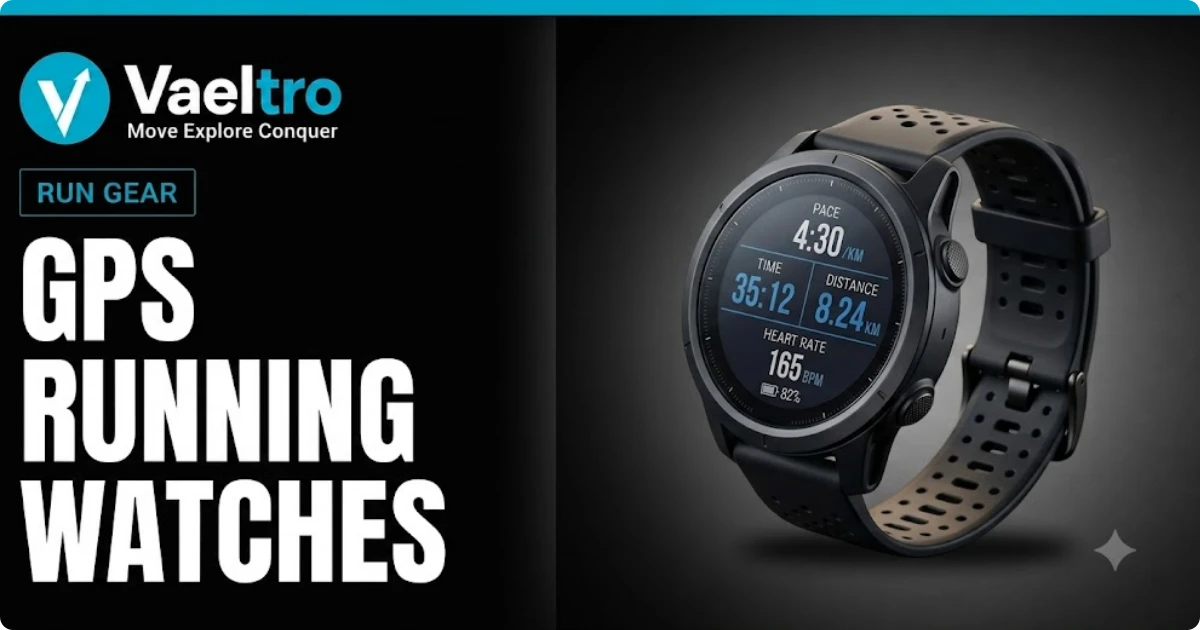
There are more GPS running watches on the market today than at any point in history. Garmin alone has more than 20 models in its current catalog. Add Coros and Polar into the picture, and choosing becomes genuinely overwhelming especially when every brand promises you the best metrics, the longest battery, and the most accurate GPS.
The problem is that no single watch is the best for every runner. A beginner training for their first 5K has completely different needs from an ultrarunner covering 100 miles. The watch that works brilliantly for marathon training might frustrate a trail runner who needs offline maps and a multi-day battery.
This guide covers every current model from Garmin, Coros, and Polar. It explains what each brand does best, where each falls short, and which specific watch belongs on your wrist based on how you actually train.
Quick Answer: For the most complete training ecosystem, choose Garmin. For the best battery life and value at every price point, choose Coros. For the most accurate heart rate data and recovery-focused insights, choose Polar. All three brands now offer multi-band GPS accuracy in their mid-range and premium models, so the brand decision comes down to your priorities not raw GPS performance.
What Separates a Great Running Watch from a Mediocre One
Before comparing models, it helps to understand the four features that actually determine how useful a GPS watch is day to day. Marketing specs can be misleading. These are the measurements that matter.
GPS Accuracy
Multi-band GPS, also called dual-frequency or L1+L5, uses two signal frequencies at once to reduce errors caused by tall buildings, tree cover, and hilly terrain. A single-band GPS watch can report a noticeably different distance on the same city route compared to a multi-band model. All mid-range and premium watches from Garmin, Coros, and Polar now include multi-band GPS. If a watch you are considering does not, that is a meaningful limitation worth knowing before you buy.
Heart Rate Accuracy
No wrist-based optical sensor perfectly matches a chest strap during high-intensity intervals. That is a technical reality across all brands. Where brands differ is in how much they drift during hard efforts. In real-world testing, Garmin’s premium models have shown accuracy within one beat per minute against a chest strap monitor at steady-state paces. Coros watches have historically been less consistent during interval sessions, with some models reading significantly high during peak effort, though newer models have improved. Polar’s optical sensors are generally reliable for daily training and the brand built its entire reputation on heart rate accuracy over five decades. For clinical precision during racing or structured intervals, a chest strap remains the gold standard regardless of which watch brand you choose.
Battery Life
Battery life matters differently depending on the runner. For a daily trainer running five to eight hours per week, almost any mid-range watch from any brand will last several days between charges. Battery becomes a genuine decision point for marathon runners who want music playing during a four-hour race, trail runners doing multi-day efforts, and ultrarunners who cannot afford for a watch to die mid-event. Coros has made exceptional battery life its signature advantage across its entire lineup. Garmin’s Enduro series targets the same ultrarunner market but at a higher price. Polar’s Grit X2 offers strong battery life for its category.
Training Features vs Smart Features
This is the divide that most buyers do not think about clearly enough before purchasing. A dedicated running watch prioritizes training load analysis, recovery guidance, structured workout support, and running dynamics. A smartwatch prioritizes notifications, contactless payment, music streaming, and app integration. Garmin occupies both spaces. Coros leans firmly toward dedicated running performance. Polar sits closer to training science than smartwatch convenience. Knowing which side of this divide matters more to you will save you a significant amount of money and frustration.
Garmin Running Watches: The Full Lineup Explained
Garmin owns the largest share of the GPS running watch market and has built the most comprehensive training platform available to consumer athletes. The Garmin Connect ecosystem, structured workouts, training readiness scores, and daily suggested workouts are features that no competitor has fully replicated at scale. The trade-off is price. Garmin charges a premium at every tier, and navigating the model lineup without guidance can be genuinely confusing.
Garmin Forerunner 55 Best for Beginners
The Forerunner 55 is the entry point into Garmin’s running ecosystem and it punches well above its price. It includes wrist-based heart rate, GPS tracking, daily suggested workouts, recovery time estimates, and safety features including incident detection and live tracking. The hardware feels budget-friendly in the hand, but the software experience is essentially the same Garmin ecosystem that serious athletes pay three times as much to access. For a runner who is just getting started and wants to grow into their watch rather than outgrow it quickly, the Forerunner 55 is a sensible starting point.
Garmin Forerunner 165 Best Budget AMOLED
The Forerunner 165 was the watch that brought Garmin’s AMOLED display experience to a more affordable price point. The display is noticeably brighter and more readable than the MIP screens found on older budget models. It adds training readiness and HRV status monitoring that the Forerunner 55 does not include. For a runner ready to move beyond the most basic tracking and willing to spend a bit more for a better daily experience, the Forerunner 165 represents strong value without approaching flagship territory.
Garmin Forerunner 265 Best All-Rounder
Many experienced runners and coaches point to the Forerunner 265 as the most balanced watch Garmin makes. It combines a premium AMOLED display with the full suite of Garmin’s training intelligence, including Training Readiness, HRV Status, Morning Report, offline music, and basic maps. Battery life is rated at around 24 hours in GPS mode, which handles a marathon comfortably. The Forerunner 265 does not have full color topographic maps, which is the clearest reason to step up to the 965. For runners who train on roads and tracks and want every meaningful Garmin training feature without paying for a trail navigation system they will never use, the 265 is the most logical choice in the lineup.
Garmin Forerunner 965 Best for Serious Runners
The Forerunner 965 takes everything the 265 offers and adds downloadable color topographic maps, a larger AMOLED display, extended battery life at 31 hours in GPS mode, and premium build materials. The navigation experience on trails becomes genuinely useful rather than functional but basic. The software feature set is identical to the 265, which is an important point. You are paying for the hardware and the navigation experience, not for deeper training analytics. For runners who split time between roads and trails, or who simply want the best daily experience Garmin’s Forerunner line offers, the 965 is the top of that range.
Garmin Forerunner 970 Best Performance Watch
The Forerunner 970 is Garmin’s current flagship running watch, positioned above the 965 with more advanced performance tracking and a significant price increase. It carries the most validated training algorithms in the consumer wearable space, including Race Predictor and a refined Training Readiness score. The 970 is the clearest recommendation for competitive athletes, including triathletes, who want every available performance metric and the most accurate race-day data. The trade-off relative to the 965 is that the price jump is substantial, and battery life still trails Garmin’s own Enduro series for ultralong efforts.
Garmin Fenix 8 Best for Trail and Adventure
The Fenix series is Garmin’s premium multisport and adventure line. Where the Forerunner series is optimized primarily for running, the Fenix 8 handles trail running, hiking, climbing, skiing, diving, and everyday smartwatch use within the same hardware. The build is more rugged, the display is larger, and the feature set is broader. Runners who spend significant time off-road and want a single watch that transitions between sport and life seamlessly will find the Fenix 8 compelling. Runners who primarily stay on roads will find themselves paying for features they never use.
Garmin Enduro 3 Best for Ultrarunners
The Enduro 3 is built for one purpose: lasting longer than any reasonable running effort requires. Battery life in GPS mode extends to an exceptional level that easily covers multi-day ultramarathon events. It shares much of the Forerunner 970’s performance software in a more rugged, long-duration body. If you race ultras, crew events, or run through multi-day expeditions, the Enduro 3 is the specific Garmin for you. For any runner whose longest effort is under 24 hours, the Enduro’s advantage over the 965 or 970 is less meaningful in practice.
Coros Running Watches: The Full Lineup Explained
Coros entered the GPS watch market later than Garmin and Polar but earned a rapid following among endurance athletes by offering standout battery life, clean software, and competitive specs at prices consistently below equivalent Garmin models. The brand’s defining characteristics are the scroll wheel navigation system, class-leading battery performance across the entire lineup, and a genuine commitment to free software updates that add meaningful features over time. The Coros app and ecosystem are functional but narrower than Garmin Connect, and that is a real trade-off to understand before buying.
Coros Pace 3 Best Lightweight Budget Pick
The Coros Pace 3 weighs just 30 grams, which makes it one of the lightest GPS running watches available from any major brand. It includes multi-band GPS, 38 hours of GPS battery, and Coros’s EvoLab training metrics at no subscription cost. For a runner who wants accurate tracking, a capable training platform, and a watch that essentially disappears on the wrist during long efforts, the Pace 3 is exceptional value. The MIP display is not the most visually impressive, but it performs well in direct sunlight where AMOLED screens can sometimes struggle.
Coros Pace 4 Best Budget AMOLED Upgrade
The Pace 4 takes the Pace 3’s core strengths and adds an AMOLED display, improved battery life, a built-in microphone for voice notes, and menstrual cycle tracking. GPS battery increases to 41 hours in activity mode, and daily use extends to approximately 19 days. The ability to record a voice note summarizing your workout feel immediately after finishing is a small but genuinely useful feature for athletes who track training quality over time. The Pace 4 sits at a price point where it competes directly with Garmin’s Forerunner 165 and comes out ahead on battery and weight while offering a comparable feature set for pure running.
Coros Apex 2 Pro Best Value Flagship
The Apex 2 Pro is widely regarded as the strongest value play in the premium running watch category. Its titanium bezel and sapphire crystal glass give it a build quality that outpaces its price. GPS battery life reaches 75 hours in standard GPS mode, which is class-leading for its price tier. The Apex 2 Pro covers all meaningful running and multisport features, including FTP detection for cycling, interval prescriptions, and open-water tracking. Its main limitation compared to Garmin’s equivalent tier is ecosystem depth. The Coros app handles training well but does not offer the breadth of third-party app support through a platform equivalent to Garmin’s Connect IQ.
Coros Apex 4 Best Bang for Your Buck
The Apex 4 brings titanium construction, full offline maps, substantial battery life, and the ability to make phone calls into a package that costs significantly less than comparable flagship models from Garmin. The 46mm version offers 65 hours of GPS battery. It targets runners and outdoor athletes who want a premium feature set without the flagship price, and it largely delivers. Coros launched the Apex 4 in 2026 as part of its most significant product update cycle, and it represents the brand’s strongest all-round statement at the premium end of the market.
Coros Vertix 2S Best for Extreme Endurance
The Vertix 2S sits at the top of the Coros lineup and is designed for athletes who operate at the extreme end of endurance sport. Battery life in GPS mode pushes well beyond what most runners will ever need. It handles multi-day expeditions, extreme altitude environments, and advanced navigation demands. For the majority of runners, including serious marathoners and trail runners doing standard ultra distances, the Apex 2 Pro or Apex 4 will cover everything the Vertix 2S offers at a lower price. The Vertix 2S is the right choice when extreme endurance and conditions are non-negotiable.
Polar Running Watches: The Full Lineup Explained
Polar has been making heart rate monitors and training devices for over 50 years. The brand lost significant ground to Garmin and Coros in the 2010s but has staged a genuine return to competitiveness over the past several years. Polar’s philosophy is rooted in training science, and its software ecosystem reflects that. Features like Sleep Plus Stages, Nightly Recharge, and HRV-based recovery guidance are more detailed and actionable on Polar’s platform than on any comparable watch from its competitors. Polar’s interface tends toward simplicity, which some runners find refreshing and others find limiting.
Polar Pacer Best Entry-Level Polar
The Polar Pacer is the brand’s most affordable GPS running watch and a solid starting point for runners who want accurate GPS and Polar’s recovery metrics without a large investment. It does not include multi-band GPS, which is worth knowing, but at its price point it competes reasonably against Garmin’s entry-level offerings. The display is straightforward, and the watch does not try to do more than it is designed for.
Polar Pacer Pro Best Mid-Range Polar
The Pacer Pro adds improved GPS accuracy and running power measurement, which is a feature Polar has built into its software platform natively for years and is more recently appearing on competing brands. The LCD screen is functional but basic compared to the AMOLED displays now common at similar price points from Garmin and Coros. For a runner who prioritizes accurate GPS, running power data, and Polar’s training ecosystem over display quality and smartwatch conveniences, the Pacer Pro represents genuine value.
Polar Vantage M3 Best Everyday Training Watch
The Vantage M3 is the mid-range model in Polar’s Vantage lineup and is designed for runners who train regularly and want detailed health and performance data without the weight or price of a flagship device. It includes an AMOLED display, multi-band GPS, and the full Polar training platform including daily training targets, recovery status, and sleep analysis. Priced below Garmin’s Forerunner 265, the Vantage M3 competes on heart rate accuracy and recovery insight while conceding some ground on ecosystem breadth and smartwatch integration.
Polar Vantage V3 Best for Recovery-Focused Runners
The Vantage V3 is Polar’s most complete running watch and its best expression of what makes the brand worth choosing over competitors. The watch’s strength is recovery: Sleep Plus Stages, Nightly Recharge, and HRV tracking are more detailed and more actionable here than on any competing device at a comparable price. For runners who take training load seriously, who follow periodization plans, and who want a watch that helps them understand when to push and when to hold back, the Vantage V3 delivers insight that Garmin and Coros cannot quite match. The AMOLED display is bright and responsive, and the weight is low enough for everyday comfort.
Polar Grit X2 Pro Best for Trail and Mountain Running
The Polar Grit X2 Pro is Polar’s outdoor performance watch and its answer to the Garmin Fenix and Coros Apex lines. It features a titanium case and a 1.28-inch display protected by sapphire glass. The Scandinavian design balances rugged capability with enough restraint to make it wearable all day without looking like a hiking accessory. Battery life extends up to 90 hours in Eco training mode, 30 hours in Performance mode, and approximately a week in smartwatch mode. For runners who spend meaningful time on trails, in mountains, or across multi-discipline efforts, the Grit X2 Pro proves that Polar competes at the top of the outdoor market. It covers trail running, cycling, swimming, and mountain sports within a single device that is genuinely easy to wear every day.
Garmin vs Coros vs Polar: Brand Comparison by Priority
| Brand | Best For | Multi-Band GPS | Battery Life (GPS Mode) | HR Accuracy | Ecosystem | Price Range |
|---|---|---|---|---|---|---|
| Garmin | Deepest training analytics and ecosystem | Mid-range and above | Up to 31 hrs (FR965) / 40+ hrs (Enduro 3) | Within ~1 bpm on premium models | Garmin Connect + Connect IQ apps | $150 – $1,200+ |
| Coros | Best battery life and value at every tier | Mid-range and above | Up to 75 hrs (Apex 2 Pro) / 65 hrs (Apex 4) | Reliable at steady pace; less consistent at high intensity | Coros app — clean, functional, narrower | $200 – $700 |
| Polar | Heart rate accuracy and recovery science | Mid-range and above | Up to 90 hrs Eco mode (Grit X2 Pro) | Industry-leading optical HR heritage | Polar Flow — recovery and HRV focused | $150 – $600+ |
Choosing between brands comes down to four practical questions. If you want the deepest training analytics platform and the widest ecosystem of apps, partners, and community features, Garmin is the answer. If you want the best battery life at every price point, the lightest hardware, and competitive training metrics without paying the Garmin premium, Coros is the stronger choice. If heart rate accuracy and science-backed recovery guidance are your highest priorities, Polar delivers better in those specific areas than either competitor.
GPS accuracy across all three brands has converged significantly at the mid-range and premium level. All three now offer dual-frequency GPS on watches above their entry-level tier, and real-world distance accuracy differences between brands are minor in normal conditions. The gap between brands on this metric has narrowed enough that it should not be the deciding factor for most runners.
Best Running Watch by Runner Type
| Runner Type | Top Pick | Runner-Up | Key Reason |
|---|---|---|---|
| Beginner | Garmin Forerunner 55 | Coros Pace 3 | Guided workouts and easy learning curve vs. lighter weight and better battery |
| Marathon Training | Garmin Forerunner 265 | Coros Apex 2 Pro | Full Garmin analytics vs. 75-hr battery and titanium build at lower price |
| Trail Running | Garmin Forerunner 965 | Coros Apex 4 | Color topographic maps vs. best-value offline maps and battery |
| With Music | Garmin Forerunner 265 | Coros Apex 4 | Spotify offline + strong battery for race-day music use |
| Recovery-Focused | Polar Vantage V3 | Polar Grit X2 Pro | Most detailed HRV, Sleep Plus Stages, and Nightly Recharge available |
| Ultrarunning | Garmin Enduro 3 | Coros Vertix 2S | Multi-day battery built specifically for extreme endurance events |
Best GPS Running Watch for Beginners
The Garmin Forerunner 55 and the Coros Pace 3 are the two strongest options for runners just starting out. The Forerunner 55 offers a gentler learning curve through Garmin’s well-designed interface and guided daily workouts that explain what to do and why. The Coros Pace 3 offers better battery life, lighter weight, and stronger value on hardware specs. New runners who want to grow into their data and enjoy exploring metrics will likely prefer the Garmin ecosystem long-term. Runners who want simplicity and exceptional battery without complexity will be equally well served by the Pace 3.
Best Running Watch for Marathon Training
The Garmin Forerunner 265 and the Coros Apex 2 Pro sit at the top of this category. The Forerunner 265 covers every training metric a marathon runner needs, including training readiness, race predictor, and daily suggested workouts built around your current fitness. The Coros Apex 2 Pro adds 75 hours of GPS battery, titanium build, and a lower price. For most marathon runners, either watch handles everything training demands. The choice comes down to whether Garmin’s deeper app ecosystem or Coros’s battery advantage is more valuable to you personally.
Best Running Watch for Trail Running
For trail running, offline maps and extended battery life become critical. The Garmin Forerunner 965 and the Coros Apex 4 are the most complete choices at the premium end. The Polar Grit X2 Pro earns a strong recommendation here as well, particularly for runners who want deep recovery data alongside outdoor navigation. The Garmin Fenix 8 is the most capable trail and adventure option Garmin offers but comes at a significantly higher price that is justified primarily if you engage in multiple outdoor sports year-round.
Best Running Watch with Music
Offline music storage is available on several models across Garmin and Coros. Garmin’s Forerunner 165, 265, and 965 all support offline music from services including Spotify and other major platforms, depending on region. The Coros Apex 4 also supports music. Battery drain during music playback is a real factor to plan around, particularly for races longer than two to three hours. Test battery consumption in training before relying on music storage for race day.
Best Running Watch for Women
Every watch on this list is available in versions suitable for all runners. Smaller case sizes are offered by several models, including the Coros Pace series and the Garmin Forerunner 265S, which is the smaller-diameter variant of the standard model. Polar’s Vantage M3 and Vantage V3 both include menstrual cycle tracking integrated into recovery guidance, which adds specific value for female athletes who want their training load recommendations to account for hormonal cycle phases. Garmin’s platform also supports cycle tracking through Garmin Connect.
Best Running Watch for Men
The same model recommendations apply regardless of the runner. Larger case variants are available across all brands for runners who prefer more wrist presence or find smaller displays harder to read during activity. The Garmin Fenix 8 and Coros Vertix 2S tend to appeal to runners who want a larger, more substantial build. Every feature and performance spec covered in this guide applies equally regardless of how the buyer is categorized.
What to Look for Before You Buy
Do You Need a Smartwatch or a Running Watch?
This question alone eliminates the wrong purchase for many buyers. A running watch optimized for training performance may handle notifications and basic smartwatch functions, but it will not match the daily convenience of a true smartwatch. If your priority is a device that looks good in a meeting, handles Apple Pay reliably, and syncs deeply with your iPhone or Android experience, the Apple Watch Ultra is worth considering alongside dedicated running watches. If your priority is training data, battery life measured in days rather than hours, and running-specific metrics that dedicated brands have refined over years, a running watch from Garmin, Coros, or Polar will serve you better than any smartwatch currently on the market.
How Much Should You Spend?
The entry-level tier from any of the three brands, roughly $150 to $250, delivers GPS tracking, wrist-based heart rate, and essential training metrics that genuinely improve the training experience. The mid-range tier, roughly $300 to $450, adds AMOLED displays, multi-band GPS, more advanced training analytics, and features like offline music and cycle tracking that raise the daily experience meaningfully. The premium tier, above $500, adds topographic maps, titanium or sapphire glass construction, and the deepest performance tracking available. Spending above the mid-range is justified when specific premium features, particularly navigation or ultra-long battery, address a real part of how you train.
Which App Ecosystem Fits Your Life?
Garmin Connect is the most comprehensive platform available on a consumer sports watch. It offers training load history, performance metrics over time, a wide library of third-party apps through Connect IQ, and integration with most major training platforms. The Coros app is clean and functional with a tighter feature set that covers everything most runners need without the depth for advanced customization. Polar Flow is built around training science and recovery insight, and its daily targets, sleep analysis, and HRV data are more actionable than what comparable watches from other brands provide. The app you will actually use regularly is more important than a feature comparison chart. If you already use Strava, Trainingpeaks, or another platform as your primary training hub, check compatibility with your preferred service before committing.
Final Verdict
Garmin, Coros, and Polar are all capable of supporting runners at every level, from first-time GPS users to elite competitors. The brand differences that matter are ecosystem depth (Garmin leads), battery life and value (Coros leads), and heart rate and recovery science (Polar leads). GPS accuracy between brands has converged to a level where it no longer drives the purchase decision for most runners.
Beginners choosing their first GPS watch will find the Garmin Forerunner 55 or Coros Pace 3 to be the most practical and capable starting points. Runners building toward marathons will get the most from the Garmin Forerunner 265 or Coros Apex 2 Pro. Trail runners and outdoor athletes who need maps and multi-day battery should look at the Garmin Forerunner 965, Coros Apex 4, or Polar Grit X2 Pro depending on which brand philosophy they prefer. Runners who take recovery as seriously as training, and want a device that guides both, will find Polar’s Vantage V3 to be the most thoughtful recommendation.
No single watch wins across every category. The best running GPS watch is the one that matches how you train, what your goals are, and how much you want to spend to get there.
