

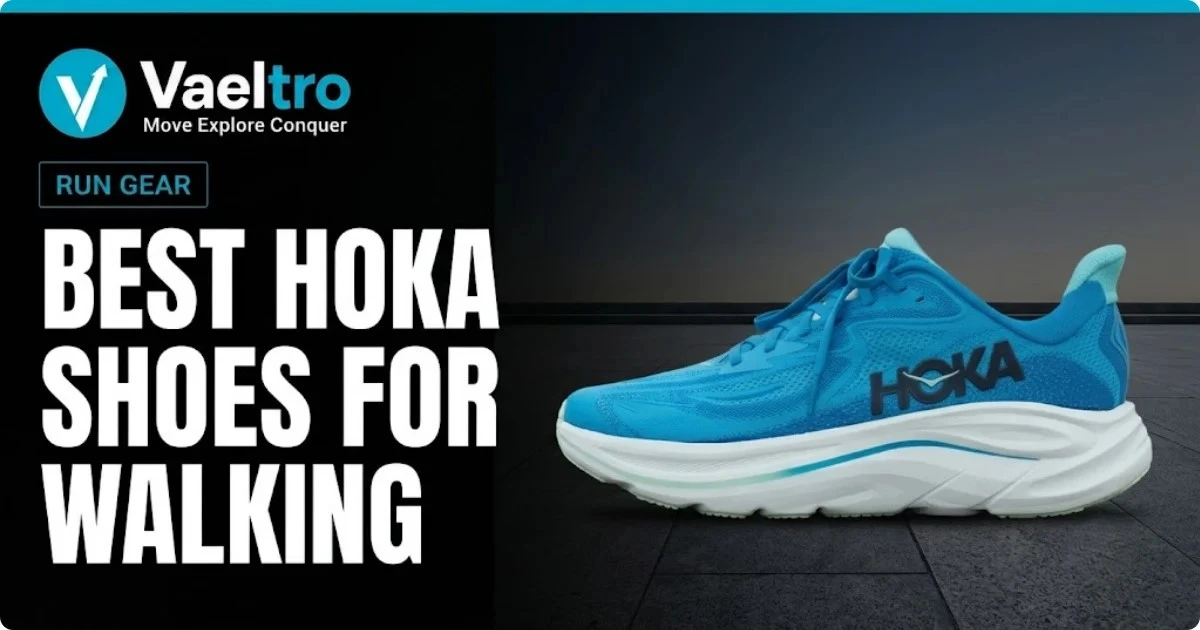
You spend a lot of time on your feet. Whether it’s long shifts at work, daily walks around the neighborhood, or hours of standing on hard floors, the shoes you wear make a real difference by the end of the day. HOKA has become one of the most recommended brands for exactly this kind of use and for good reason.
This guide covers every major HOKA walking shoe worth considering, explains what separates each model, and helps you figure out which one fits your needs, your foot type, and your budget.
Quick Answer
The HOKA Clifton 10 is the best all-around walking shoe for most people it balances cushioning, weight, and stability better than any other model in the lineup. If you need maximum plush underfoot, go with the Bondi 9. For arch support and overpronation control, the Gaviota 6 is the right pick.
Why HOKA Works So Well for Walking
HOKA built its reputation on maximalist cushioning thick midsoles that absorb impact before it reaches your joints. That design philosophy, which originally targeted ultramarathon runners, turned out to be exactly what walkers and people on their feet all day needed too.
A few things set HOKA apart from typical walking shoes. The stack height the amount of foam between your foot and the ground is significantly higher than most competitors, often 35 to 45mm at the heel. That extra material absorbs the repetitive impact of walking on concrete, tile, or pavement for hours at a time.
HOKA also uses a meta-rocker geometry on most of its shoes. Instead of a flat sole, the bottom curves slightly from heel to toe. This encourages a smooth rolling motion as you walk, which reduces the effort your calf and Achilles tendon have to produce with each step. For people who log serious mileage on foot, that translates to noticeably less fatigue by the end of the day.
The brand holds the American Podiatric Medical Association’s Seal of Acceptance across several of its models, and podiatrists regularly recommend HOKA shoes for patients dealing with plantar fasciitis, joint pain, and other foot conditions. That recognition reflects real structural merit, not just marketing.
The Best HOKA Walking Shoes, Ranked
| Model | Best For | Cushion Level | Heel Drop | Approx. Price |
|---|---|---|---|---|
| HOKA Clifton 10 | Best overall, everyday walking | High | 8mm | $145 |
| HOKA Bondi 9 | Maximum cushioning, standing all day | Maximum | 5mm | $170 |
| HOKA Gaviota 6 | Arch support, overpronation | High | 6mm | $180 |
| HOKA Arahi 8 | Flat feet, mild overpronation, knee pain | High | 8mm | $150 |
| HOKA Bondi SR | Work environments, slip resistance | Maximum | 6mm | $175 |
| HOKA Transport 2 | City and light trail walking | High | 5mm | $145 |
| HOKA Transport GTX | Waterproof walking, wet conditions | High | 5mm | $200 |
HOKA Clifton 10 Best Overall
The Clifton 10 is the most balanced walking shoe HOKA makes. It delivers serious cushioning without the bulk of the Bondi, keeps weight reasonable, and works equally well for fitness walks, commuting, or long days on your feet.
The stack height sits at 44.4mm in the heel and 32mm in the forefoot among the highest in the Clifton line’s history. In independent lab testing, it returned strong shock absorption scores at both the heel and forefoot, meaning it genuinely reduces the impact that travels up through your legs and joints with every step.
Despite that height, the Clifton 10 stays stable. The midsole base is wide enough to keep you centered, and the sidewalls hold your foot in place without feeling restrictive. The flexibility score in bend tests is close to average, which means the shoe moves naturally with your foot rather than fighting it.
The upper uses a breathable engineered mesh with a padded heel collar that’s gentle on the Achilles. It comes in both standard and wide widths, and most testers find it runs true to size.
One honest note: the Clifton 10 added weight compared to the Clifton 9 and uses older foam technology that some reviewers consider a step backward in responsiveness. If you’re upgrading from a previous Clifton, you’ll notice the shoe feels more substantial underfoot. For most walkers, that’s not a problem but speed-focused walkers may prefer waiting for the next generation.
- Weight: 9.8 oz (men’s), 8.0 oz (women’s)
- Heel drop: 8mm
- Best for: everyday walking, commuting, mixed running and walking
- Price: around $145
HOKA Bondi 9 — Best for Maximum Cushioning
If cushioning is your top priority whether because you stand on hard floors all day, have achy joints, or simply love a plush ride the Bondi 9 is the shoe to choose.
The Bondi is HOKA’s most cushioned shoe. With a heel stack of 41.3mm and a forefoot stack of 32.2mm, it delivers one of the softest landings in the entire brand lineup. Shock absorption scores place it well above average at both the heel and forefoot, and the tongue is notably padded compared to most running-style shoes.
The midsole uses a supercritical EVA compound a lighter-weight foam that’s also slightly more responsive than the older Bondi formula. The result is a shoe that feels cushioned without the dead, heavy sensation some maximalist shoes produce.
The Bondi 9 is also surprisingly stable given its height. The midsole base is wide, and the sidewalls are elevated enough to keep your foot from rolling. It works well for heel strikers, which describes most walkers.
The main downsides: the Bondi 9 runs a bit heavy, and the toe box is narrower than you might expect for such a large shoe. People with wide feet often find it a tight fit, so trying it on before buying is worthwhile. It also lacks a gusseted tongue, which means the tongue can shift slightly during longer wear.
- Weight: 10.5 oz (men’s), 9.3 oz (women’s)
- Heel drop: 5mm
- Best for: standing all day, joint protection, maximum comfort
- Price: around $170
HOKA Gaviota 6 Best for Arch Support and Overpronation
The Gaviota 6 is HOKA’s highest-support stability shoe, designed for walkers whose feet roll inward excessively a pattern called overpronation. If your shoe soles wear faster on the inner edge, or if you experience pain in your ankles, knees, or lower back after long walks, you likely need stability support.
What sets the Gaviota apart is its H-Frame technology. Rather than a harsh medial post that forces your foot into position, the H-Frame surrounds the midsole perimeter with firmer foam while leaving softer foam in the center. This creates a stable foundation without making the ride feel stiff or punishing.
In lab testing, the Gaviota 6 showed high torsional rigidity meaning the shoe resists the twisting motion that leads to overpronation — while still offering shock absorption scores that exceeded average. The landing base is wide and the midsole sidewalls are elevated, both of which help keep the foot aligned correctly.
The Gaviota 6 also has a notably roomy fit compared to most HOKA models. The toe box is wider than average, making it a solid choice for walkers with broader feet. It’s available in wide and extra-wide widths.
One consideration: the Gaviota 6 uses older CMEVA foam rather than a more advanced compound, which limits its responsiveness. It’s a durable, supportive shoe, but it doesn’t feel as lively as the Clifton or Bondi underfoot.
- Weight: 10.25 oz (men’s), 8.62 oz (women’s)
- Heel drop: 6mm
- Best for: overpronation, flat feet, arch support, broader feet
- Price: around $180
HOKA Arahi 8 Best for Flat Feet and Knee Pain
The Arahi 8 sits one step below the Gaviota in HOKA’s stability hierarchy and is aimed at mild-to-moderate overpronation. If you need some guidance without the full structure of the Gaviota, this is the more natural-feeling option.
Earlier versions of the Arahi used J-Frame technology, which provided support only along the inner midsole. The Arahi 8 upgraded to H-Frame, extending stability to both the medial and lateral sides of the shoe. This creates a more balanced ride that doesn’t overcorrect, which is important — a little pronation is normal and healthy.
The Arahi 8 is noticeably lighter than the Gaviota, making it easier to wear for long periods without leg fatigue. The stack height at 39mm provides good cushioning, and the heel drop of 8mm works well for most walking gaits.
For walkers dealing with knee pain specifically, the Arahi’s combination of stability and cushioning helps reduce the inward collapse of the foot that can put stress on the knee joint over time. It’s available in wide and extra-wide widths.
- Weight: 9.8 oz (men’s), 7.7 oz (women’s)
- Heel drop: 8mm
- Best for: mild overpronation, knee pain, lighter stability needs
- Price: around $150
HOKA Bondi SR Best for Work and Standing All Day
The Bondi SR is the Bondi built for the workplace. It takes everything the standard Bondi does well thick cushioning, wide base, smooth ride and adds safety features that professional environments demand.
The outsole is slip-resistant and has been tested on surfaces with water, oil, and soap. In wet-condition traction testing, it significantly outperforms average shoes on slippery tile the kind of surface nurses, kitchen workers, and warehouse employees face all day. The upper uses water-resistant leather rather than mesh, which resists spills and is easy to clean.
The cushioning is identical in principle to the standard Bondi plush EVA midsole with a low 6mm heel drop. People who stand on concrete or tile for 8 to 12 hours consistently report less foot and leg fatigue in the Bondi SR compared to standard workplace shoes.
The tradeoff is weight. The Bondi SR is noticeably heavier than other HOKA models, and it’s not breathable. For a traditional workplace setting where you’re standing and walking at a slow pace, neither of those is a major issue. For someone covering large distances at a faster pace, the weight becomes more noticeable.
- Weight: 14 oz (men’s), 11.5 oz (women’s)
- Heel drop: 6mm
- Best for: nurses, kitchen staff, retail workers, long standing shifts
- Price: around $175
HOKA Transport 2 Best for City and Light Trail Walking
The Transport 2 was designed with daily commuters and urban walkers in mind, but it handles light trail surfaces well enough to double as a weekend hiking option.
The standout feature is the Vibram EcoStep Recycle outsole — a premium rubber compound that provides significantly better traction than standard outsoles on both wet pavement and packed trails. Durability testing shows minimal outsole wear even under heavy use, and the rubber thickness adds to its long-term lifespan.
The midsole offers solid cushioning with a 38mm heel stack and a rocker shape that makes forward movement feel effortless. The upper uses a Cordura mesh construction that’s structured and durable without being rigid, and the shoe is available in wide widths.
The Transport 2 uses a quick-toggle bungee lacing system with traditional laces included in the box — a practical feature for people who need to get in and out of their shoes quickly.
The main limitation is breathability. The Cordura upper doesn’t breathe well in heat, and the shoe can run warm in summer. For fall, winter, and cooler conditions, it performs excellently.
- Weight: slightly heavier than average
- Heel drop: approximately 5mm
- Best for: city walking, commuting, light trails, cooler weather
- Price: around $145
HOKA Transport GTX Best Waterproof Walking Shoe
For walkers who deal with rain, wet trails, or cold wet conditions regularly, the Transport GTX offers the most complete weatherproofing in HOKA’s lineup.
The combination of a Gore-Tex membrane and Cordura upper material keeps feet dry in sustained rain and wet grass. In smoke breathability testing, the Transport GTX confirms its near-complete water tightness — which is exactly what you want in a waterproof shoe, even if it comes at the cost of airflow in warm weather.
The Vibram outsole delivers strong traction on both wet city surfaces and loose terrain. The torsional rigidity is high, which adds stability on uneven ground. The rocker geometry still provides smooth transitions, and the shoe includes both a quick-lace system and traditional laces.
The Transport GTX is heavier than the standard Transport 2, and some testers note that there’s a discrepancy between the stated and measured heel drop. It’s also stiffer than most casual walking shoes. For dedicated use in wet conditions, those are acceptable tradeoffs.
- Heel drop: approximately 5mm (verified measurement may differ from stated specs)
- Best for: rainy weather walking, wet trails, commuting in cold climates
- Price: around $200
Clifton vs. Bondi Which One Should You Walk In?
This is the most common question people ask about HOKA, and the honest answer depends on what you’re doing.
The Clifton 10 is lighter, more versatile, and works well whether you’re walking at a brisk pace or using the shoe for a mix of running and walking. Its cushioning is substantial, but not so soft that it affects your stability or posture during longer periods of standing.
The Bondi 9 is plusher, heavier, and built more specifically for comfort over performance. If you’re spending the majority of your day standing still or walking slowly on hard surfaces — a hospital, a warehouse floor, a retail environment — the Bondi’s extra cushion will feel better at the end of the day. If you’re covering real distance at a walking pace and care about how the shoe feels in motion, the Clifton is the better experience.
One thing worth knowing: very soft cushioning can work against you during prolonged standing. When you sink deeply into a plush midsole while standing, your posture can subtly shift over time, which sometimes leads to lower back discomfort. This affects some walkers with the Bondi and not others. If you’ve had that experience with very cushioned shoes in the past, the Clifton is the safer choice.
What to Look for in a HOKA Walking Shoe
Cushioning Level
All HOKA shoes are well-cushioned none of them have a shock absorption score below 100 in independent testing, and every model in this guide has a heel stack over 30mm. The question is degree. The Bondi and Bondi SR are the most plush. The Clifton is moderately cushioned with more responsiveness. The Arahi and Gaviota offer slightly firmer cushioning because the stability structure requires a less compressible foam in certain zones.
Heavier walkers, people with joint conditions, and anyone standing on hard floors for long shifts generally benefit from more cushioning. Faster-paced walkers who want a more connected feel underfoot typically prefer the Clifton’s balance.
Stability and Arch Support
If your feet pronate moderately, the Clifton’s wide base provides enough passive stability for most people. For confirmed overpronators or anyone who’s been told by a podiatrist or physical therapist that they need motion control the Gaviota 6 is the right choice for moderate-to-severe overpronation, and the Arahi 8 works well for mild cases.
Fit and Toe Box Room
HOKA shoes vary more in fit than most people expect. The Bondi 9, despite its size, runs narrow in the toe box. The Gaviota 6 and Arahi 8 offer the most room for wider feet. The Clifton 10 sits in the middle — generous enough for most foot shapes without feeling sloppy on narrow feet. All models are available in at least one wide width, and several offer extra-wide options.
HOKA generally runs true to size. If you’re between sizes, sizing up half a size is usually the safer call.
Durability
HOKA shoes typically last 300 to 500 miles before the cushioning begins to compress noticeably. Signs that your shoes need replacing include a visibly flatter midsole, increased leg or foot fatigue, or discomfort that wasn’t there when the shoes were new. The Transport 2 and Transport GTX, with their Vibram outsoles, show significantly better outsole durability than mesh-soled models.
Who Are HOKA Walking Shoes Best For?
Walkers with Plantar Fasciitis
Plantar fasciitis responds well to shoes that combine a wide, stable base, good heel cushioning, and a firm enough heel counter to keep the rearfoot in place. The Gaviota 6 meets all three criteria and is the most commonly recommended HOKA model for this condition. The Clifton 10 and Bondi 9 are also frequently used, though they lack the Gaviota’s active stability support. If your plantar fasciitis is associated with overpronation, the Gaviota is the clearest choice.
One note: very soft midsoles can sometimes aggravate plantar fasciitis in certain walkers by allowing too much foot movement. If you’ve tried the Bondi and found it didn’t help, the Gaviota’s firmer structure may work better for you.
Seniors and Older Walkers
For seniors, the priority is usually comfort over distance, stability on varied surfaces, and ease of getting the shoe on and off. The Clifton 10 and Bondi 9 both serve this audience well. The Clifton’s lighter weight makes it easier to wear for extended periods, while the Bondi’s extra cushioning benefits walkers with joint sensitivity. The Gaviota 6 is a strong recommendation for older walkers who overpronate or have had ankle instability issues. Wide widths are available across all three models.
Women Looking for the Best HOKA Walking Shoe
Women’s versions of all the shoes in this guide are available with women’s-specific lasts and colorway options. The Clifton 10 is the most popular HOKA walking shoe among women due to its lighter weight and versatility. The Gaviota 6 and Arahi 8 are strong picks for women who need arch support. Women with narrower feet tend to find the Bondi 9’s fit more manageable than men with the same concern. The Bondi SR is available in women’s sizing and comes in wide width.
How Long Do HOKAs Last?
HOKA shoes are built to last, but they’re not indestructible. The standard lifespan is 300 to 500 miles for most models — roughly six months to a year for someone walking five miles per day. The foam compresses gradually over time, and you’ll lose cushioning performance well before the upper shows obvious wear.
A few practical signs your HOKAs are due for replacement: your feet and legs feel more tired than usual after the same walk, the midsole looks visibly compressed or tilted, or you’re experiencing foot pain that wasn’t there when the shoes were newer. Don’t rely on outsole condition alone — the rubber often outlasts the foam.
Models with Vibram outsoles (Transport 2 and Transport GTX) show better outsole longevity than standard rubber, which helps in high-mileage use cases.
Where to Buy HOKA Shoes and How to Find Deals
HOKA sells directly through its website at hoka.com, where you’ll find the full range of models and colorways. The official site also offers free returns, which is useful for a brand where fit varies between models.
For deals, a few reliable options are worth checking regularly. Running specialty retailers like Road Runner Sports and Running Warehouse run sales on previous-season colorways, often at 20 to 30 percent off. Amazon and Zappos stock HOKA consistently and often have discounts on older versions when a new model releases.
Signing up for HOKA’s email list gives access to periodic sale events, and the brand typically offers a small welcome discount to new subscribers. REI also stocks select HOKA models and offers member discounts.
One buying tip: when a new version of a shoe launches, the previous version usually drops in price quickly. The Clifton 9, for example, becomes significantly cheaper once the Clifton 10 is available — and the performance difference between consecutive versions is usually modest enough that buying a generation back is a smart value decision.
Final Verdict
HOKA is one of the best walking shoe brands available right now, and for most people, the Clifton 10 is where to start. It’s versatile, well-cushioned, stable, and comfortable across a wide range of walking use cases. If you need more plush underfoot for standing on hard floors all day, step up to the Bondi 9. If arch support or overpronation is a concern, the Gaviota 6 addresses that directly and better than any other model in the lineup.
Every shoe in this guide has genuine merit for the right person and the right situation. The key is matching the model to your specific foot type, your daily activity, and how you’ll actually use the shoe. Get that right, and HOKA will make your feet noticeably happier by the end of the day.
