

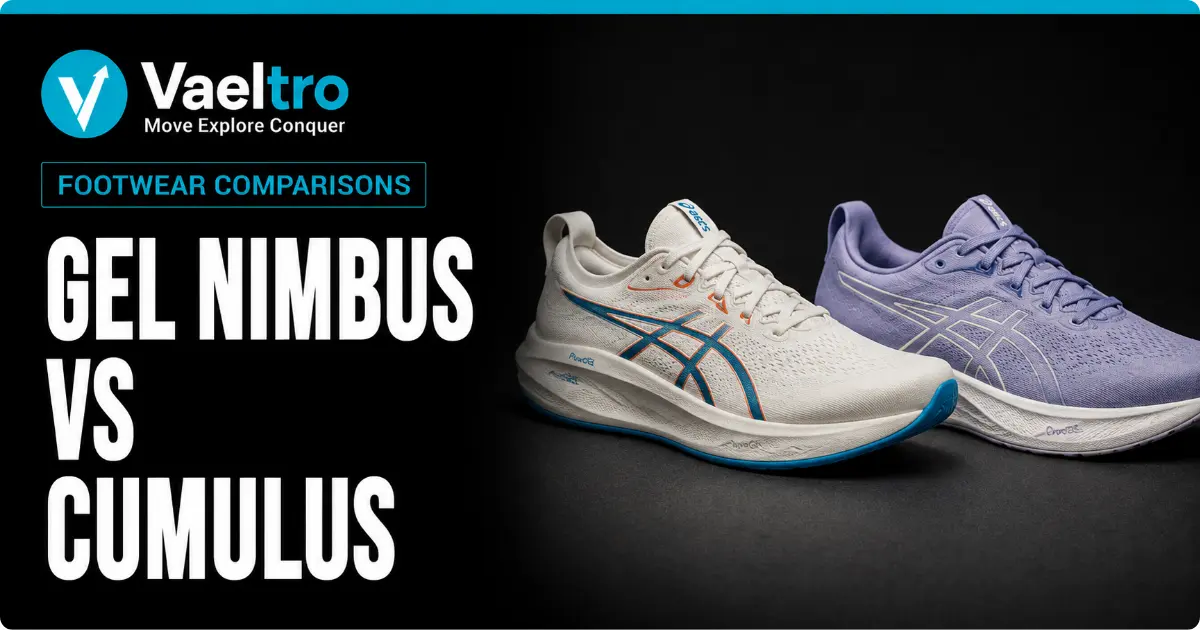
ASICS makes a lot of running shoes. But when runners start looking for a reliable neutral daily trainer, two names come up again and again: the Gel Nimbus and the Gel Cumulus. They share more DNA than you might expect, yet they serve meaningfully different runners. Choosing the wrong one can leave you feeling like you overpaid or like you left comfort on the table.
This guide breaks down exactly what separates these two shoes, who each one suits, how they fit into the broader ASICS lineup, and how recent generations have evolved. Whether you are comparing a specific version or just trying to decide which direction to go, you will have a clear answer by the end.
Quick Answer
The Gel Nimbus is ASICS’ flagship neutral trainer built for maximum cushioning, long-distance comfort, and runners who want the softest possible ride. The Gel Cumulus is a step down in price but not in quality; it delivers balanced, responsive cushioning that suits a wider range of paces and training types. Choose the Nimbus for plush protection on long easy miles; choose the Cumulus for versatile daily training at a lower cost.
What Is the Difference Between the Nimbus and Cumulus?
| Feature | Gel Nimbus | Gel Cumulus |
|---|---|---|
| Position in lineup | Flagship neutral trainer | Versatile daily trainer |
| Cushioning level | Maximum | Balanced |
| Midsole foam | FF Blast+ with more foam volume | FF Blast+ with lower stack |
| GEL placement | Heel and forefoot (most versions) | Heel only (most versions) |
| Ride character | Soft, protective | Responsive, versatile |
| Weight | Heavier | Lighter |
| Gait type | Neutral | Neutral |
| Width options | Multiple widths available | Multiple widths available |
The simplest way to understand the relationship: the Gel Nimbus sits at the top of ASICS’ neutral running shoe hierarchy, and the Gel Cumulus is what the industry calls a “takedown” a shoe built on a similar platform but tuned to be lighter, more responsive, and more affordable.
Both shoes use ASICS’ FF Blast+ foam and PureGEL technology in the heel. Both are designed for neutral runners. Both fit true to size and are available in multiple widths. The similarities are real and intentional.
What separates them is the execution. The Nimbus uses more foam, more gel, and a more protective construction. The result is a softer, heavier shoe suited to high-mileage runners and those who prioritize cushioning above all else. The Cumulus trims some of that structure to create a lighter shoe with a bit more ground feel and energy return one that performs well across a broader range of workouts.
Neither shoe is simply better. They are optimized for different runners and different goals.
Cushioning and Underfoot Feel
Gel Nimbus Maximum Softness for Long Hauls
The Gel Nimbus is built around one core promise: a plush, protective ride that holds up over long distances. To deliver this, ASICS stacks FF Blast+ foam with PureGEL units in the heel, and in most recent versions, forefoot gel as well. The result is a ride that stays soft and consistent from the first mile to the last.
Where you really notice the Nimbus is on easy long runs and recovery days. The cushioning doesn’t pack out quickly, and the shoe maintains its soft character even as mileage builds. Heavier runners in particular benefit from this — the Nimbus continues to absorb impact effectively at higher body weights where a lighter shoe might feel firmer than expected.
The trade-off is feel. The deep stack of foam creates some distance between your foot and the road, which reduces ground feel. The shoe also absorbs a portion of the energy you put in it is a comfort machine, not an efficiency machine.
Gel Cumulus Balanced Cushioning with More Energy Return
The Gel Cumulus uses the same FF Blast+ foam as the Nimbus but with a lower stack height and, in most versions, PureGEL placement only in the heel rather than both heel and forefoot. This produces a noticeably different ride character: still well-cushioned, but with a touch more responsiveness and a livelier toe-off.
Runners who want to use the same shoe for easy miles, moderate-tempo runs, and the occasional faster workout tend to gravitate toward the Cumulus. It does not punish your legs when you pick up the pace the way a very soft max-cushion shoe can. It also returns slightly more energy with each stride, which becomes noticeable on longer efforts when fatigue accumulates.
The cushioning on the Cumulus is genuinely comfortable this is not a firm shoe. But it is not trying to replicate the Nimbus experience at a lower price. It is a different tool for a different type of runner.
Midsole and Stack Height Compared
Stack height is one of the clearest technical differences between these two shoes, and it explains much of the cushioning contrast.
The Gel Nimbus carries a taller midsole, placing more foam between your foot and the ground. This gives it a higher platform feel and greater impact absorption. The heel-to-toe drop has historically been 8mm across most versions, though this has varied slightly by generation.
The Gel Cumulus sits lower to the ground with a reduced stack, which connects you more directly to the road surface. The lower profile also contributes to the shoe’s stability during faster running — there is less midsole to compress and shift underfoot.
Runners transitioning from minimalist or lower-drop shoes will generally find the Cumulus easier to adapt to. Runners coming from heavy-cushion shoes like the HOKA Bondi or the Brooks Glycerin will feel right at home in the Nimbus.
Both shoes include a mild heel rocker geometry that smooths the transition through the gait cycle, reducing the effort required at heel-to-toe rollthrough.
Weight and Ride Character
The Gel Nimbus is heavier than the Cumulus. The weight difference varies by generation and gender, but it is consistent across every version of these shoes the additional foam and gel in the Nimbus construction adds meaningful mass.
For runners focused on easy miles, recovery running, or everyday long runs, this weight difference is rarely a concern. The Nimbus feels cushioned and comfortable, and most runners are not checking their watch closely on recovery days anyway.
For runners who mix tempo efforts, moderate-pace training, or structured workouts into their weekly routine, the Cumulus feels noticeably more athletic. The lighter platform and firmer midsole create a shoe that responds more quickly when turnover increases. Some runners report that their legs feel fresher late in a run in the Cumulus partly due to the lower weight, partly due to the slightly more energy-returning foam.
Neither shoe is a speed trainer. Both are daily mileage shoes designed for comfort and durability. But within that category, the Cumulus leans closer to versatility and the Nimbus leans closer to pure protection.
Upper, Fit, and Width Options
Both the Nimbus and Cumulus use engineered mesh uppers that are breathable, well-constructed, and comfortable from the first wear. Neither requires a significant break-in period, which is one reason both shoes maintain loyal followings.
The Nimbus upper tends to be slightly more plush overall, with a roomier toe box in most versions and a softer heel collar. This makes it a good fit for runners with wider feet, sensitive toes, or those who simply prefer a less constraining fit.
The Cumulus upper is typically a bit more streamlined and structured. It offers excellent lockdown and holds the foot firmly through varied paces, which suits runners with medium-width feet who value a secure feel.
Both shoes run true to size and are available in standard, wide, and in some versions extra-wide options for men and narrow options for women. ASICS has consistently prioritized width accessibility across the Nimbus and Cumulus lines, which makes both shoes practical choices for runners who struggle to find well-fitting shoes in standard sizing.
Gusseted tongues on both models prevent the tongue from shifting during a run a small feature that makes a real difference on longer outings.
Who the Nimbus Is For (and Who Should Skip It)
| Runner Profile | Gel Nimbus | Gel Cumulus |
|---|---|---|
| High-mileage runners | Strong fit | Suitable |
| Heavier runners needing impact protection | Strong fit | Less ideal |
| Runners with joint sensitivity | Strong fit | Adequate |
| Easy-day / recovery running | Strong fit | Suitable |
| Mixed-pace daily training | Less ideal | Strong fit |
| Newer runners seeking versatility | Less ideal | Strong fit |
| Budget-conscious buyers | Less ideal | Strong fit |
| Runners preferring ground feel | Less ideal | Better fit |
The Gel Nimbus is the right shoe for runners who prioritize cushioning and comfort over all other factors. Specifically, it suits:
- High-mileage runners logging 50+ miles per week who need a shoe that remains protective across long training blocks
- Heavier runners who need more impact absorption than a moderately cushioned shoe can provide
- Runners with joint sensitivity — knees, hips, and ankles — who benefit from maximum shock attenuation
- Easy-day specialists who use a rotation and want one shoe dedicated entirely to slow, protected running
- Runners recovering from injury who need to reduce impact stress during a return-to-running phase
The Nimbus is not the right shoe for:
- Runners who want versatility across paces the soft foam can feel sluggish at anything faster than an easy jog
- Those who prefer a close-to-the-ground, natural feel
- Runners on a tighter budget who do not strictly need the extra cushioning
- Runners who prefer a lighter, more athletic platform for daily training
Who the Cumulus Is For (and Who Should Skip It)
The Gel Cumulus is the right shoe for runners who want reliable daily cushioning without sacrificing versatility or spending at the top end of the market. It suits:
- Everyday runners covering moderate weekly mileage across easy runs, longer efforts, and occasional faster training
- Newer runners looking for a comfortable, trusted daily trainer that does not overwhelm the foot with foam
- Lighter runners who do not need max-cushion protection and find the Nimbus feel excessive
- Runners who mix paces and want one shoe that handles both easy miles and moderate tempo work
- Budget-conscious buyers who want ASICS quality without paying for the flagship experience
The Cumulus is not the right shoe for:
- Runners with high impact needs or significant joint sensitivity who need everything the Nimbus offers
- Those who specifically want the softest possible ride and are willing to pay for it
- Runners seeking a true performance trainer or speed shoe — the Cumulus is still a cushioned daily trainer
ASICS Gel Nimbus vs Cumulus for Walking
Both shoes are well-suited for walking, and this question comes up often because ASICS neutral trainers are a popular choice for walkers particularly those who are on their feet for long periods or who walk significant daily distances.
For walking, the Gel Nimbus has a specific advantage: its deep cushioning stack absorbs the repetitive heel-strike impact that walkers generate more consistently than runners, and its comfortable upper accommodates the foot well during extended wear. Podiatrists and retail specialists frequently recommend the Nimbus for walkers with heel pain, plantar fasciitis, or general foot fatigue from prolonged standing.
The Gel Cumulus is also a solid walking shoe. It is lighter and slightly more versatile, which suits walkers who also run or who prefer a less bulky platform. The cushioning is more than sufficient for everyday walking, and the responsive midsole makes it feel less heavy on the foot during extended use.
For purely dedicated walkers especially those with any degree of foot, knee, or hip discomfort — the Nimbus is generally the stronger recommendation. For walkers who also run, or who simply prefer a lighter, more natural feel, the Cumulus is the practical choice.
How the Nimbus and Cumulus Fit Into the ASICS Lineup
Understanding where these two shoes sit relative to other ASICS models helps clarify whether either one is right for you or whether a different shoe serves you better.
Where the Kayano Sits
The Gel Kayano is ASICS’ flagship stability shoe. It is built for runners who overpronate — meaning their foot rolls inward excessively with each step — and it includes structured support elements that guide the foot through a more neutral gait cycle.
If you are a neutral runner, the Kayano is not the right shoe for you; its stability architecture is unnecessary and may even feel uncomfortable. The Nimbus and Cumulus are both neutral shoes with no motion-control elements, making them the correct choices for neutral runners who simply need cushioning and comfort.
If you are unsure whether you overpronate, a gait assessment at a specialty running store is the most reliable way to find out. ASICS also offers online pronation guides on their website.
The Kayano sits above the Nimbus in price and complexity but is not a more cushioned shoe — it is a more structured shoe. Cushioning and stability are different features, and the Nimbus is the more cushioned option of the two.
Where the Novablast Sits
The Novablast occupies a different lane entirely. It is a neutral daily trainer like the Nimbus and Cumulus, but its design focus is energy return rather than protective cushioning. ASICS’ FF Blast Max foam and the shoe’s trampoline-inspired outsole geometry create a bouncy, propulsive ride that suits runners who want a more energetic training shoe.
Runners who find the Cumulus too soft but want more excitement than a standard trainer delivers often enjoy the Novablast. It is not a max-cushion shoe and does not replace the Nimbus for high-impact protection, but it adds a liveliness that neither the Nimbus nor Cumulus offers.
Generation Differences Worth Knowing
ASICS updates both the Nimbus and Cumulus regularly. The version numbers are not always aligned — the Nimbus has historically run a generation or two ahead of the Cumulus — and the differences between generations are sometimes meaningful. Here is what to know about recent versions.
Nimbus 25 vs Cumulus 25
The Nimbus 25 represented a significant redesign of the Nimbus line, introducing FF Blast+ Eco foam and PureGEL technology to replace the older Gel cushioning system. The Cumulus 25 similarly adopted FF Blast+ foam but maintained a lower stack. Both shoes at this generation moved toward a softer, more modern foam experience compared to earlier versions. The Nimbus 25 in particular earned strong reviews for its improved weight despite retaining max-cushion character.
Nimbus 26 vs Cumulus 26
The Nimbus 26 and Cumulus 26 were well-regarded generations that refined the foam profiles established in the 25 series. The Nimbus 26 received particular praise for its balance of softness and durability, and many experienced runners consider it one of the stronger iterations of the shoe. The Cumulus 26 was similarly well-received and offered a versatile ride that appealed to a wide range of training styles.
Nimbus 27 vs Cumulus 27
The Nimbus 27 maintained the core Nimbus formula while making incremental refinements to the upper construction and overall fit. The Cumulus 27 saw a more notable upper change — moving to a slightly stiffer mesh with reduced breathability compared to the 26, which drew some criticism from runners who valued the previous version’s softer tongue and upper feel. The ride characteristics of both remained largely consistent with their prior versions.
Nimbus 28 vs Cumulus 27
As of the most recent generation cycle, the Gel Nimbus 28 launched while the Cumulus remained at version 27 — the version numbering occasionally runs out of sync. The Nimbus 28 delivered a meaningful weight reduction compared to the 27 while retaining the FF Blast+ midsole. Some testers noted the 28 feels slightly firmer than the 27 despite its improved lightness. If you are comparing these two current models side by side, the Nimbus 28 versus Cumulus 27 pairing is where most head-to-head analysis currently sits.
Why Podiatrists Often Recommend the Gel Nimbus
The Gel Nimbus has a long-standing reputation in clinical settings, and it comes up frequently in podiatrist recommendations. The reasons are practical rather than promotional.
First, the Nimbus provides a high level of cushioning that reduces peak impact forces on the foot — relevant for runners and walkers dealing with plantar fasciitis, heel spurs, metatarsalgia, or general forefoot pain. The deep foam stack distributes pressure more evenly across the plantar surface of the foot.
Second, the Nimbus has been a consistent, well-documented shoe for over two decades. Podiatrists who recommend it can rely on the design philosophy remaining relatively stable across generations, which matters when recommending a shoe to a patient managing a specific condition.
Third, the wide-width availability and accommodating toe box make the Nimbus practical for a broader range of foot shapes, including those with bunions, hammertoes, or other structural considerations.
This does not mean the Nimbus is the right shoe for every patient or every condition. Runners with stability needs require a different shoe. But within the neutral cushioning category, the Nimbus earns clinical trust through its consistent, protective design.
Frequently Asked Questions
What is the main difference between the ASICS Gel Nimbus and Cumulus? The Nimbus is ASICS’ flagship max-cushion neutral trainer softer, heavier, and priced higher. The Cumulus is a more versatile daily trainer with balanced cushioning, lighter weight, and more energy return. Both use similar materials, but the Nimbus prioritizes maximum protection while the Cumulus balances comfort with responsiveness.
Which is better for walking the Gel Nimbus or Gel Cumulus? Both work well for walking, but the Nimbus is the stronger choice for walkers with foot pain, joint sensitivity, or high daily step counts. Its deeper cushioning provides more impact protection. The Cumulus suits walkers who also run or who prefer a lighter, less bulky shoe.
Is the Gel Cumulus a cheaper version of the Nimbus? The Cumulus is more affordable than the Nimbus, but it is not simply a budget version. It is designed for a different type of runner one who values versatility and responsive cushioning over maximum softness. Many runners actually prefer the Cumulus once they understand the difference.
Which is better for long-distance running the Nimbus or Cumulus? For slow, easy long runs focused on recovery and comfort, the Nimbus is the stronger option. For runners who run long but at varied paces, or who want one shoe to cover multiple training types, the Cumulus handles long distances effectively while remaining versatile.
How do the Nimbus and Cumulus compare to the Kayano? The Kayano is a stability shoe designed for runners who overpronate. The Nimbus and Cumulus are neutral shoes. If you have a neutral gait, neither the Nimbus nor Cumulus requires the Kayano’s stability architecture. Runners who overpronate should consider the Kayano or GT-2000 instead.
Which shoe is better for women runners specifically? The core differences between the Nimbus and Cumulus apply equally to women’s versions. Women’s variants of both shoes are available in standard and narrow widths. The Nimbus suits women runners prioritizing maximum cushioning; the Cumulus suits those wanting a lighter, more versatile daily trainer.
Final Verdict
The ASICS Gel Nimbus and Gel Cumulus are both excellent neutral daily trainers. They are not in competition they serve different runners, and understanding that distinction makes the choice straightforward.
Choose the Gel Nimbus if you run high mileage, carry a heavier build, manage any joint sensitivity, or simply want the most protected, cushioned ride ASICS produces in its neutral lineup. It earns its premium positioning through consistent long-distance comfort and clinical credibility built over decades.
Choose the Gel Cumulus if you want a shoe that handles daily miles across a range of paces, costs less, and does not feel excessive underfoot. It is not a compromise it is the right tool for runners who do not need max-cushion protection and gain more from a versatile, well-balanced trainer.
Either shoe will serve you well for everyday running and walking. The only wrong choice is selecting the more expensive option simply because it feels more premium, or dismissing the Nimbus because it costs more. Match the shoe to your actual training needs, and both will repay you with comfort and durability across many miles.
