

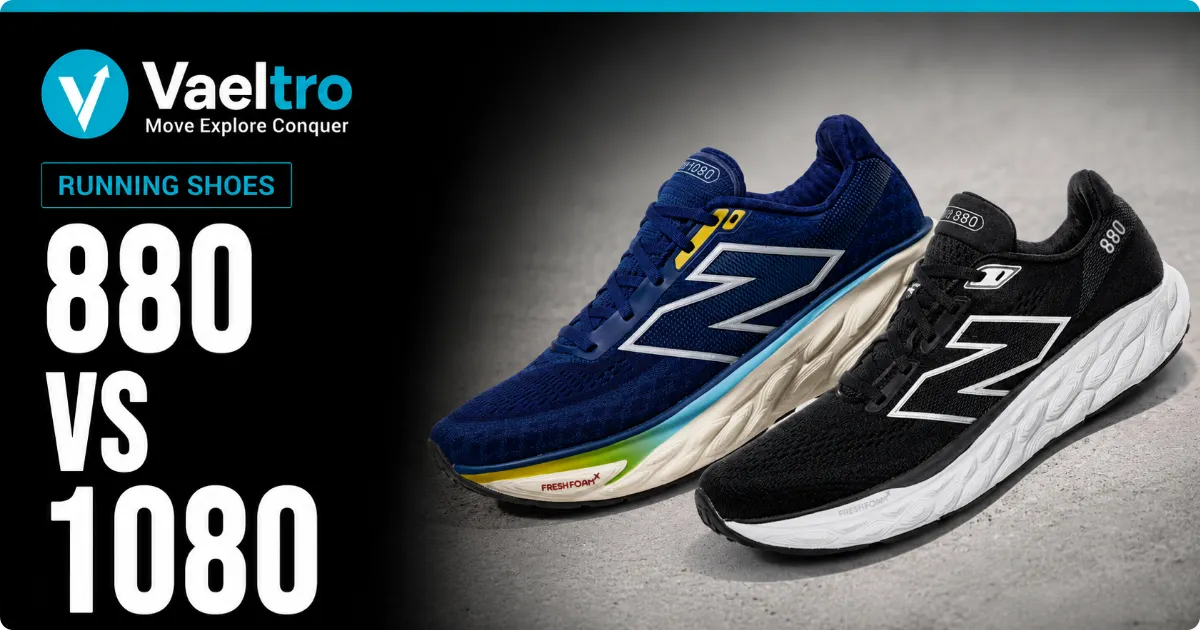
New Balance makes the decision harder than it needs to be. Both the 880 and the 1080 are neutral daily trainers built on Fresh Foam X. Both target road runners who want comfort and reliability. Both are recommended constantly across running communities. So what actually separates them?
The honest answer: more than most buyers expect and that gap has widened with the most recent versions of each shoe. The 880 has changed dramatically from the shoe it used to be, and the 1080 has evolved too. If you’re comparing older information, you may be working from a picture that no longer applies.
This guide breaks down every meaningful difference between the two shoes so you can buy with confidence and avoid returning a shoe that simply was not right for your foot type, running style, or intended use.
How the 880 and 1080 Compare at a Glance
| Feature | New Balance 1080v14 | New Balance 880v15 |
|---|---|---|
| Heel Stack Height | 38mm | 40.5mm |
| Forefoot Stack Height | 32mm | 34.5mm |
| Heel Drop | 6mm | 6mm |
| Weight (Men’s) | ~10.1–10.5 oz | ~10.5–10.6 oz |
| Foam Character | Soft, plush | Firm, dense |
| Rocker Geometry | Pronounced | Mild |
| Midfoot Outsole | Exposed foam | Blown rubber |
| Fit Character | Snug, narrow toe box | Roomy, spacious toe box |
| Sizing Advice | Half size up recommended | True to size |
| Width Options | Standard, Wide, X-Wide | Narrow, Standard, Wide, X-Wide |
Both shoes sit in New Balance’s neutral road trainer lineup and share the Fresh Foam X midsole platform. From the outside, they look similar. Side by side on a run, they feel quite different.
The 1080 is New Balance’s flagship daily trainer the shoe the brand would keep if it had to strip its lineup to one model. It is designed primarily around maximum cushioning and long-run comfort, with a rockered geometry that promotes smooth, efficient transitions. The midsole is softer and more plush than most comparable trainers at this price point.
The 880 occupies a different position. It has traditionally been positioned as a versatile, mid-tier trainer: a shoe that works across a broader range of paces and training types rather than specializing in maximum cushioning. However, the most recent version of the 880 the v15 went through a significant redesign. It now carries a larger stack height than the 1080, a wider and roomier fit, and a denser foam character that reads as firm-but-protective rather than cloud-soft.
The result is a comparison that is more nuanced than a simple “flagship vs budget” framing. Both shoes are capable daily trainers with distinct identities.
Key specs for reference 1080v14: 38mm heel / 32mm forefoot stack, 6mm drop. 880v15: 40.5mm heel / 34.5mm forefoot stack, 6mm drop. Both shoes weigh roughly 10 to 10.5 ounces in men’s sizing.
Midsole and Cushioning: Where They Really Differ
This is the most important comparison for most buyers. Both shoes use Fresh Foam X, but the foam is tuned differently and the construction around it creates a meaningfully different ride.
Fresh Foam X in the 1080
The 1080 midsole is softer, more compressible, and designed to absorb impact on long runs. The foam returns energy reasonably well for how plush it feels it does not feel dead or mushy under foot. New Balance tuned the v14 slightly firmer than its predecessor, which improved transitions and gave the shoe a bit more responsiveness without sacrificing the core comfort feel.
The rockered geometry is more pronounced in the 1080. You feel it actively rolling you through the gait cycle, which many runners describe as a smooth, assisted sensation during longer miles. This rocker also gives the 1080 a mild element of pace-friendliness some runners push tempo-ish efforts in it without feeling held back.
The forefoot is stiffer in the v14 compared to earlier versions, which improves toe-off. The midfoot has exposed midsole foam on the outsole, which contributes to a softer, more ground-feel-oriented landing experience.
Fresh Foam X in the 880
Despite carrying more foam volume than the 1080, the 880v15 does not feel softer. The foam compound is denser and firmer underfoot. The result is a shoe that absorbs road impact and protects the foot without the marshmallow sensation that some runners associate with the 1080.
The 880 runs a bit flatter. The rocker is present but less assertive than in the 1080. The ride feels more planted and traditional more like a conventional daily trainer than a modern, propulsive cushioned shoe. The foam returns energy, but without the same immediacy or snap that the 1080 delivers.
For runners who want maximum cushioning volume, the 880v15 technically has more foam. For runners who want the softer, more luxurious underfoot experience, the 1080 wins despite having a smaller stack.
Outsole and Durability
Both shoes use rubber compound outsoles with coverage designed to protect high-wear zones at the heel and forefoot. They handle road surfaces well and offer reasonable grip for normal running conditions. Neither is built for trail use.
The key structural difference is in the midfoot. The 880 covers its midfoot section with blown rubber, which provides better traction continuity and more durable protection underfoot. The 1080 leaves the midfoot with exposed foam this improves ground feel and softens the landing experience, but it is less durable over time and more vulnerable to wear if you frequently run on rough or abrasive road surfaces.
For most road runners logging normal training volume, durability is not a significant concern with either shoe. Runners putting in very high weekly mileage may find the 880 holds up slightly longer.
Upper, Fit, and Feel
This is where the two shoes diverge most noticeably for many buyers and where sizing decisions become important.
The 1080 uses an engineered knit upper that is soft, slightly stretchy, and breathable. The tongue is generously padded and attached on both sides to the upper, which eliminates tongue slide. The heel collar is structured to lock the foot in place without creating pressure. The overall fit is relatively snug and wrapped, particularly in the toe box.
The fit runs narrow for most buyers. Going up a half size is the standard recommendation for the 1080 — particularly if you have a wider forefoot or higher foot volume. The shoe is available in standard, wide, and extra-wide options, which helps, but even in standard width it fits smaller than expected.
The 880v15 has a different upper character. The mesh material is breathable but thicker and less airy than the 1080’s knit some runners find it runs slightly warmer in hot conditions. The trade-off is a significantly more spacious fit, particularly in the toe box, where there is more natural width and room for the toes to splay. The overall sensation is more roomy and disappearing rather than the locked-in hug of the 1080.
The 880 runs true to size for most buyers and is available in narrow, standard, wide, and extra-wide. This additional width range gives it a broader accessibility advantage, particularly for runners with bunions, wide forefoots, or orthotic requirements.
If you prefer a more secure, wrapped feel: the 1080. If you prefer a roomier, more natural toe box environment: the 880.
Ride Character: What Each Shoe Actually Feels Like
Understanding the actual experience of running in each shoe is the part that comparison charts cannot fully communicate.
The 1080 has an active, rolling ride. The rocker moves you forward and the responsive foam adds a degree of energy to each step. It does not feel like a racing shoe it is still firmly in the comfort-cushioning category but it has enough drive to make faster efforts feel supported rather than sluggish. Runners describe it as smooth, plush, and encouraging. It performs best on easy to moderate long runs, recovery days, and anywhere the goal is miles without effort.
The 880v15 has a more stable, neutral ride. The foam is firm enough to prevent the sinking sensation that some runners dislike in max-cushioned shoes, and the flatter platform feels grounded and controlled. It does not push you the way the 1080 does. Instead, it simply absorbs and protects without getting in the way. Runners describe it as solid, reliable, and comfortable without fuss.
If you tend to throw a few tempo-pace miles into your easy days, the 1080’s character handles that better. If you want a consistent, no-drama shoe that does one thing well across all your easy and recovery runs, the 880 is the stronger choice.
Who Should Buy the New Balance 1080
The 1080 is the right shoe for runners who prioritize a smooth, plush ride on longer runs and want a daily trainer that can also handle moderate pace variation without switching shoes.
It suits runners who log high weekly mileage and want a reliable soft-landing trainer that does not destroy their legs over time. The rocker geometry makes it particularly helpful for runners who experience fatigue in their calves or Achilles after long efforts, as it reduces the ankle plantarflexion demand at push-off.
It is also a strong pick for runners who enjoy the sensation of a shoe working with their stride rather than simply sitting beneath it the 1080’s active geometry and soft foam make the run feel supported in a way that some runners find motivating.
Runners who tend toward a narrow or standard foot width and can comfortably size up a half size will get the best experience from this shoe.
Who the New Balance 1080 Is NOT For
| Runner Type | Better Choice |
|---|---|
| Wants soft, plush cushioning | 1080 |
| Wants a rolling, forward-drive ride | 1080 |
| Prefers a snug, wrapped fit | 1080 |
| Mixing easy runs with moderate pace variation | 1080 |
| Wants firm-but-protective cushioning | 880 |
| Prefers a roomy, spacious toe box | 880 |
| Uses custom orthotics | 880 |
| Wide feet or needs narrow sizing | 880 |
| Prioritises value at similar cushion volume | 880 |
The 1080 is not ideal for runners who need a wide natural toe box without sizing up. If you have a wide forefoot or dislike any upper pressure over your toes, even the wide version can feel snug compared to other options on the market including the 880v15.
It is also not the best pick for runners who want an all-purpose trainer that transitions cleanly from slow recovery miles to faster intervals. The soft, plush foam does not offer the same firmness or control at quicker paces that a more versatile trainer would provide. Runners who want one shoe to cover the full pace spectrum would be better served by a more structured option.
The 1080 is not recommended for runners with a strong preference for a flat, traditional midsole geometry. The rocker is functional but noticeable and for runners accustomed to neutral flat shoes, the rolling sensation can feel unfamiliar or even disorienting at first.
Who Should Buy the New Balance 880
The 880 is the right shoe for runners who want a dependable, high-cushion daily trainer with a more traditional ride feel and a roomier fit than the 1080 offers.
The 880v15’s denser foam and flatter geometry make it an excellent choice for runners who find super-plush shoes like the 1080 too soft underfoot runners who want protection without instability. The firm-but-cushioned character works well across easy paces, long runs, and recovery days.
Its roomier toe box and true-to-size fit make it the stronger pick for runners with wider feet, those who use custom orthotics, or anyone who simply prefers space over a snug wrap. The availability of narrow sizing is an added bonus for runners on the other end of the spectrum.
The 880 is also the better value option. It typically retails at a lower price than the 1080 while delivering a comparable cushioning experience by total foam volume making it a strong choice for value-conscious runners who do not want to compromise on daily training comfort.
Who the New Balance 880 Is NOT For
The 880 is not the right shoe for runners seeking the most responsive, energetic ride. If you want a cushioned daily trainer that still delivers a noticeable forward drive and pop, the 1080 provides that better. The 880’s ride is protective and reliable but not exciting.
It is also not ideal for runners who want a shoe for faster training sessions. While it handles easy and moderate long runs well, the flatter, denser midsole is not particularly nimble at pace. Runners incorporating tempo work, fartleks, or marathon-pace miles into their training would benefit from pairing the 880 with a faster shoe rather than expecting it to cover all paces.
Finally, runners who specifically want the soft, plush underfoot sensation typical of max-cushioned shoes the kind of deep foam compression the 1080 delivers may find the 880 too firm despite its larger stack. More foam does not always mean a softer feel, and the 880v15 demonstrates this clearly.
New Balance 880 vs 1080 for Walking
Both shoes are frequently used for walking, and both perform well in that role. The choice between them for walking comes down to the same factors that matter for running: cushioning feel, fit, and stability preference.
The 1080’s rocker geometry, which helps running transitions, is equally beneficial for walkers. It reduces the demand on the Achilles and calf during the push-off phase of walking, making it a comfortable option for all-day wear and extended walking. The softer foam absorbs impact well at walking speeds. Many walkers and those who spend long hours on their feet find the 1080 more forgiving than expected.
The 880 provides more underfoot stability for walking due to its firmer foam and flatter platform. For walkers who dislike the rocking sensation of modern trainers or who want a shoe that simply sits flat and absorbs without rolling them through the stride, the 880 is the more natural-feeling choice. Its roomier toe box is also more accommodating for swelling that can occur during extended walking.
For mixed-use buyers who run and walk in the same shoe, the 1080 is the more versatile performer. For dedicated walking use or all-day wear where stability and fit space are the priority, the 880 is a strong alternative.
New Balance 880 vs 1080 for Plantar Fasciitis
Neither the 880 nor the 1080 is a stability or motion control shoe, so neither directly addresses overpronation-related plantar fasciitis. However, both provide meaningful benefits for runners and walkers managing this condition, and the right choice depends on what your feet actually need.
The 1080’s soft, high-cushion foam reduces ground reaction forces at the heel a primary concern for plantar fasciitis sufferers. The rocker geometry also reduces the strain placed on the plantar fascia during push-off by minimizing the degree to which the toes must extend. Many runners managing plantar fasciitis find this combination particularly helpful on recovery runs and easy miles.
The 880 offers a different kind of support. The firmer foam provides a more stable base, which some plantar fasciitis sufferers prefer particularly those for whom excessive foot motion is a contributing factor. The roomier toe box reduces forefoot compression, which can alleviate secondary tension points that worsen plantar fasciitis symptoms. For runners using custom orthotics as part of their treatment protocol, the 880’s available volume and wider platform make it more accommodating.
In practice, runners with plantar fasciitis who want maximum shock absorption at the heel tend to prefer the 1080. Those who need a stable base for orthotics or who find soft shoes make their symptoms worse tend to prefer the 880. If in doubt, consulting a podiatrist or certified running specialist with access to gait analysis is always the more reliable path than choosing by spec alone.
How They Compare to Other New Balance Models
Understanding where the 880 and 1080 sit in the broader New Balance lineup helps clarify their roles.
The 680 is a lower-tier, firmer, and more affordable neutral trainer. It lacks the foam volume and comfort of either the 880 or the 1080 and is better suited to budget-conscious runners doing shorter distances.
The 860 is New Balance’s stability option in a similar price bracket to the 880 it adds medial post support for mild overpronators. If you find yourself drawn to the 880 but suspect you need some stability, the 860 is worth comparing directly.
The More v6 sits above both in terms of maximum stack height and cushioning volume. It is New Balance’s most padded road trainer and targets runners who want maximum protection at easy paces, including walkers with joint concerns.
The FuelCell Rebel is at the other end of the spectrum a lightweight, energetic trainer built for faster efforts. If you are looking for a shoe to complement the 880 or 1080 for speed work, the Rebel is the logical pairing within the New Balance family.
Final Verdict
The New Balance 880 and 1080 are both excellent daily trainers, but they are no longer interchangeable options at different price points. They are genuinely different shoes for different running needs.
The 1080 is the right pick for runners who want a soft, active, cushioned ride with a forward-rolling geometry that makes long miles feel smooth and assisted. It rewards runners who value the sensation of their shoe working with them rather than simply under them.
The 880v15 is the right pick for runners who want a stable, high-protection shoe that feels grounded and reliable without excess softness. Its larger stack and roomier fit make it the more accommodating option for wider feet, orthotic users, and runners who prefer a more traditional cushioned feel.
If you are choosing between the two and cannot decide, consider this: runners who want to feel cushioned should go for the 1080. Runners who want to feel protected should go for the 880. Both will serve you well the difference is in what you want the shoe to do beneath your foot.
