

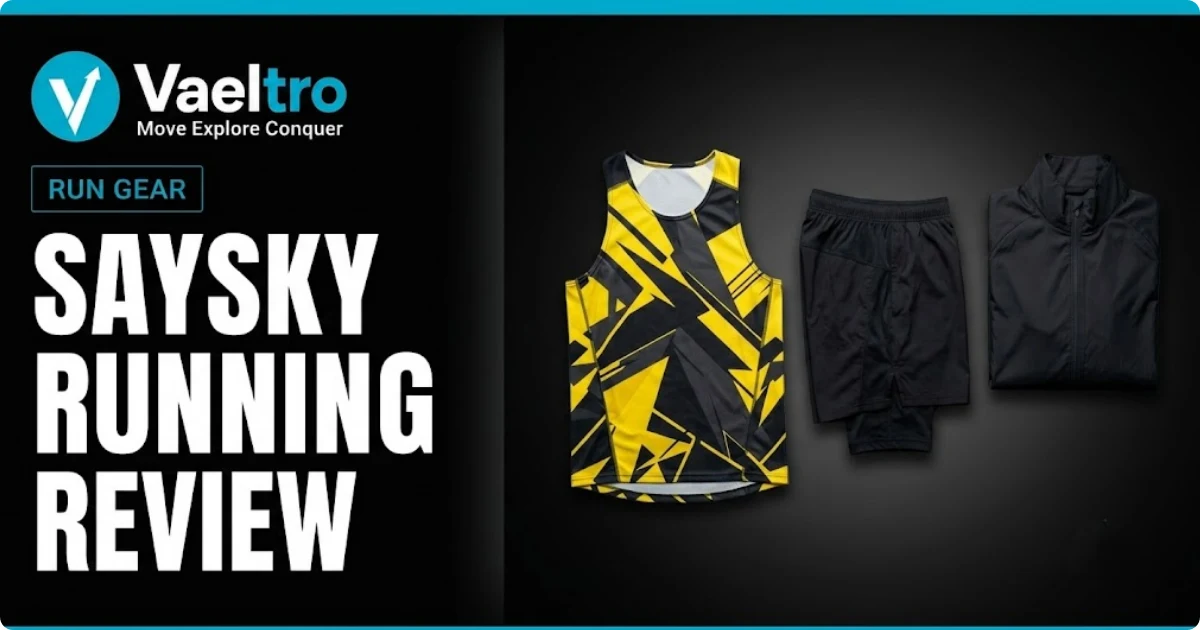
Spending $60 on a running t-shirt feels like a bold decision. Spending $75 on a pair of shorts feels even bolder. But if you’ve seen Saysky apparel on race day or spotted it on a runner with an unusually good kit, you already know why people are willing to pay for it.
Saysky is one of those brands that divides opinion before you’ve even touched the fabric. Some runners swear by it. Others think it’s overpriced. And then there are the people who’ve heard about the controversy and aren’t sure what to make of the brand at all.
This review covers everything you need to know the products, the performance, the fit, the pricing, the shoes question, and yes, the controversy so you can decide whether Saysky is right for you.
What Is Saysky?
Saysky is a Danish running apparel brand founded in Copenhagen in 2013 by Lars Pedersen, a former professional windsurfer who spent seven years on the Danish national windsurfing team before turning his attention to running gear.
The brand’s name comes from the phrase “look up at the sky and be a star” the idea of being brave enough to chase your ambitions. That spirit carries through everything Saysky makes. The design philosophy borrows heavily from surf and skate culture rather than the traditional running industry. Instead of chasing technical-looking performance gear, Saysky builds apparel with bold graphic prints, Scandinavian minimalism, and a casual confidence that makes it stand out whether you’re on a starting line or grabbing coffee after a long run.
Saysky remains entirely self-funded. Lars Pedersen has watched what happens to brands that chase venture capital and mass-market growth he’s not interested in that path. The result is a brand that has stayed true to its identity while building a genuine cult following in Denmark, the UK, Japan, and the US.
What Makes Saysky Different From Other Running Brands?
Most running brands design gear that looks fast. Saysky designs gear that looks good and then makes sure it performs.
The fabrics are built around proprietary performance technology. SAYSKYDRY is the brand’s core moisture-management material: lightweight, highly breathable, and quick-drying. Their Combat fabric uses a distinctive waffle-weave interior that keeps the material from clinging to skin, which makes a real difference in heat and humidity. Many products in their merino line use OEKO-TEX certified wool that is guaranteed mulesing-free. Some fabrics carry Bluesign approval, which signals high standards for chemical safety during manufacturing.
Production is handled through factories in China, Bangladesh, and Lithuania, all BSCI-approved for social compliance. Saysky has stated that 93% of import shipping came via sea or rail freight in 2022 a meaningful effort to reduce transport emissions. The brand also uses recycled polyester across several lines and sources Responsible Down Standard (RDS) certified materials for outerwear.
What truly separates Saysky, though, is the design approach. Lars Pedersen has said he doesn’t look at other running brands for inspiration he looks at skate graphics, surf culture, and art. The camo prints, the wildflower patterns, the bold colorways none of it comes from studying a competitor’s lookbook. It comes from a genuine point of view about what running gear should feel like to wear.
Saysky Apparel Review: Key Products Tested
| Product | Material Composition | Key Fabric Technology | Best Use |
|---|---|---|---|
| Combat T-Shirt | 100% Polyester | Waffle-weave interior (Combat fabric) | Easy runs, moderate efforts, warm weather |
| Combat Singlet | 100% Polyester | Waffle-weave interior (Combat fabric) | Race day, warm-weather workouts |
| Classic Pace Long Sleeve | 46% Recycled Polyester / 46% Polyester / 8% Spandex | SAYSKYDRY moisture management | Cool-weather training (30–45°F) |
| Pace Shorts (5″) | 88% Polyester / 12% Spandex | Built-in liner, zippered back pocket | Training runs, tempo efforts |
| 2-in-1 Pace Shorts | Outer: 88% Polyester / 12% Spandex | Compression inner layer, multi-pocket storage | Long runs, race day, marathon nutrition carry |
| Mars Blaze Jacket | Lightweight technical shell | Wind and rain protection | Cold and wet training conditions |
Combat T-Shirt and Combat Singlet
The Combat collection is Saysky’s most talked-about line, and for good reason. The Combat T-Shirt is made from 100% polyester with a waffle-weave interior that prevents the fabric from sticking to your skin during a run. Multiple testers across different publications have noted the same thing: the shirt fits well, doesn’t restrict arm swing, breathes impressively, and stays in place without sliding around. It strikes the right balance between a tailored feel and enough room to move freely.
The shirt has been described as ideal for easy runs and moderate efforts. On harder workouts, some runners prefer a fitted singlet, and the Combat collection delivers there too. The Combat Singlet uses the same waffle interior fabric and has earned strong marks for its wicking ability, particularly in warm weather. The racerback cut allows good ventilation across the upper back, and the arm openings are slightly wider than average, which reduces the chance of chafing on long runs or race days.
One honest note: the white version of the Combat T-Shirt becomes partially transparent when wet. That’s worth knowing before you buy.
Classic Pace Long Sleeve
The Classic Pace Long Sleeve blends 46% recycled polyester, 46% polyester, and 8% spandex. The spandex content gives it enough stretch that it can be worn in your standard size for a comfortable fit, or sized down if you want a more fitted base-layer feel.
Performance in cooler temperatures roughly 30 to 45 degrees Fahrenheit has been consistently praised. The material is soft, doesn’t cling after sweat builds up, and holds its shape and color through multiple washes. Testers have noted it resists odor better than many competing long sleeves, which matters if you’re trying to get several runs out of a shirt before washing.
One common request: thumb holes. At the temperatures where this shirt performs best, many runners want that extra coverage at the wrist. Saysky hasn’t added them to the design yet.
Pace Shorts and 2-in-1 Shorts
The Pace Shorts (5-inch inseam) are made from 88% polyester and 12% spandex. The fit runs slightly tighter than competing shorts at the same inseam length the material hugs the quads in a way that feels more like a compression short than a traditional loose-fit option. Runners with larger quads or a preference for more relaxed shorts should consider sizing up.
The 2-in-1 version adds a compression inner layer and significantly more pocket storage: a zip pocket at the back, two inner gel pockets, and outer side pockets. Race-day testers have confirmed that the shorts can carry five to six standard gels across the various pockets, and the waistband holds its position through long efforts without slipping.
The inner gel pockets press directly against the skin when loaded, which some runners find slightly uncomfortable. That’s a design detail worth knowing before race day, especially on a hot run when friction sensitivity increases.
For the women’s version, fit is generally true to size, though taller and shorter runners may find the length runs slightly off depending on their proportions. The adjustable drawstring helps compensate at the waist.
Mars Blaze Jacket
The Mars Blaze Jacket is a lightweight running jacket built for training in cold and wet conditions. Despite how little it weighs, it has performed well in both snow and rain in real-world testing, keeping runners dry without restricting arm movement. The materials feel premium from the first time you put it on, and multiple washes haven’t changed that.
If you’re used to heavier jackets for cold training runs, the Mars Blaze may feel too thin initially. In practice, it performs above expectations for its weight.
How Does Saysky Perform on Race Day?
Saysky gear holds up on race day, and not just for the experience of looking good at the start line.
The 2-in-1 Pace Shorts have become a go-to race option for runners who carry their own nutrition. The pocket setup is genuinely functional for a marathon enough space for gels, a key or card, and even a small soft flask if you train with your own fluids. The shorts stay in place through the full gait cycle and don’t cause rubbing even on longer efforts.
The Combat Singlet is built with race-day performance in mind. It’s breathable enough for hot-weather efforts, wicks moisture quickly, and doesn’t feel heavier after getting wet in rain. The short combat tights (made from recycled polyester) have also been praised for their slim, secure fit and reliable pocket storage that works through a half marathon or marathon distance.
One honest observation: Saysky gear is not widely worn by professional or sub-elite runners at major marathons. This isn’t a performance critique it reflects the brand’s current position in the market rather than a limitation of the fabric or construction. For recreational and competitive age-group runners, the performance credentials are fully legitimate.
Saysky Sizing: What You Need to Know Before You Buy
| Product | Sizing Verdict | Notes |
|---|---|---|
| Combat T-Shirt | True to size | White version becomes partially transparent when wet |
| Combat Singlet | True to size | May run slightly long for women with shorter torsos |
| Classic Pace Long Sleeve | True to size | Can size down for a fitted base-layer feel |
| Pace Shorts (5″) | Consider sizing up | Runs tighter through the quads than comparable shorts |
| 2-in-1 Pace Shorts | True to size | Adjustable drawstring helps accommodate waist variation |
| Mars Blaze Jacket | True to size | Consistent with other Saysky categories |
Saysky sizing is one of the most frequently asked questions in running communities, and the good news is relatively simple: most pieces run true to size.
The Combat T-Shirt and Singlet fit true to size for both men and women across most body types. The Classic Pace Long Sleeve is also true to size, though it can be sized down for a snug base-layer fit if preferred. The Pace Shorts tend to run slightly tighter through the quads than equivalent inseam lengths from other brands sizing up is worth considering if you prefer more room in that area.
Women with shorter torsos may find that some tops particularly the Combat Singlet run slightly long. Taller women have generally found the length proportional. The 2-in-1 Shorts waistband accommodates most sizes well thanks to the drawstring.
One practical advantage that Saysky has earned genuine praise for: sizing is consistent across product categories. A medium is a medium whether you’re buying a t-shirt, a long sleeve, or a jacket. In an industry where sizing often feels like a lottery, that reliability is worth more than it sounds.
Does Saysky Make Running Shoes?
Saysky’s primary business is running apparel, but the brand has entered the footwear market through collaborations rather than standalone shoe development.
The most notable shoe collaboration is with Finnish brand Karhu the Karhu x Saysky Fusion 3.5, a neutral daily trainer with a 6mm heel-toe drop, responsive cushioning, and a Saysky-designed upper. The shoe is built for neutral-footed runners and carries Saysky’s visual aesthetic while using Karhu’s Fulcrum propulsion technology.
Saysky also collaborated with Puma on a collection that included three shoes: the Deviate Nitro 3, the Deviate Nitro Elite 3, and the ForeverRun Nitro 2. Those shoes range from daily trainers to race-day options and were released through both brands’ websites and select specialty retailers.
If you’re searching for Saysky running shoes, these collaborations are what’s available. Saysky does not currently produce proprietary shoes under its own technical platform.
The Saysky Controversy: What Actually Happened?
Saysky has generated real controversy twice, both times through marketing campaigns that alienated a portion of the running community.
The first was a campaign built around the message of “how not to be a jogger” positioning running at a performance level in a way that many recreational runners found condescending and exclusionary. The backlash was widespread enough that it became a talking point in running communities online.
A second campaign followed a similar pattern, with messaging that some runners read as celebrating elitism within the sport. The brand has described its philosophy as celebrating “egocentric performance,” and in their About page they also include language about inclusion and running being for everyone regardless of pace or origin. The contrast between those messages has struck some observers as inconsistent.
It’s worth understanding the context. Saysky was founded by someone who came from surf culture, where brands deliberately build identity through edge and attitude. Controversial marketing is a calculated strategy, not an accident. The brand knows some people will be put off and it’s also aware that others are drawn in by the same energy.
Whether the controversy matters to your purchasing decision is a personal call. The apparel itself has no connection to the messaging. But if you’ve encountered the controversy and wanted a clear explanation of what happened, that’s it.
Saysky vs. the Competition: Is the Price Justified?
Saysky positions itself in the same price bracket as Tracksmith, Lululemon, and On Running apparel. A combat t-shirt runs around $60, pace shorts around $75, and the Mars Blaze Jacket considerably more. By the standards of mass-market running gear Nike, Adidas, New Balance that’s expensive. By the standards of premium technical running apparel, it’s competitive.
The honest answer to whether the price is justified depends on what you’re buying for.
If you want the best technical running fabric at this price point, Saysky competes. The fabrics are genuinely high quality, the construction holds up through repeated washing, and the sizing consistency removes the guesswork that makes online shopping for running gear frustrating.
If you’re buying Saysky, you’re also buying the design and identity. The prints and colorways are unlike anything in mainstream running retail. Some runners want to stand out. Some don’t. That’s a preference, not a quality argument.
One legitimate concern is customer service. Reviews on Trustpilot show a mixed record some customers have had straightforward, responsive experiences, while others have reported slow responses or no resolution to shipping issues. There is no phone support available. For a brand charging premium prices, that’s a gap worth knowing about before you buy.
Who Should Buy Saysky and Who Should Skip It?
Saysky is worth buying if you want high-quality running apparel that actually performs, prefer gear with a distinctive look over mainstream brand aesthetics, and you’re comfortable with a premium price point that reflects both the materials and the identity you’re buying into.
The brand is a particularly strong fit for race-day kit, warm-weather training, and runners who treat their running gear as an extension of how they present themselves rather than purely as a functional tool.
Saysky is a harder sell if you want budget-friendly performance gear, prefer mainstream sizing you can return easily in-store, or if the marketing controversies don’t sit well with you. The customer service situation also means that if something goes wrong with an order, resolution may take time
Final Verdict
Saysky delivers on its core promise: premium running apparel that performs well and looks genuinely different from everything else in the market. The fabrics are high quality, the fit is reliable, and the gear holds up on both training days and race days. The design philosophy is coherent and executed well.
The price is real, and so are the tradeoffs. Customer service is inconsistent, the controversy is documented and worth knowing about, and Saysky shoes are collaboration products rather than a standalone line.
For runners who want performance gear that also reflects a point of view about what running culture can look like the premium is justified. For everyone else, it comes down to whether the design and identity are worth the gap over less expensive options. Based on what the brand actually delivers in fabric quality and performance, the answer is often yes.
